Posted on May 8, 2026
If you have ever caught yourself staring at your reflection and wishing for a straighter smile, you are certainly not alone. For a long time, the only way to fix a malocclusion or crooked teeth was to embrace a mouth full of metal. Today, technology has shifted. You likely see people every day who are currently in the middle of orthodontic treatment, and you do not even realize it.
Clear aligners have completely changed the landscape of cosmetic dentistry. They offer a way to reach your dream smile without the brackets and wires that define traditional braces. But how does a simple-looking piece of plastic actually move a tooth through solid bone?
It seems like magic, but it is actually a blend of high-level engineering and biological science. Let us break down exactly what happens from the moment you decide to start to the day you reveal your new look.
The process does not start with plastic; it starts with data. In the past, you had to bite into a tray of goopy, uncomfortable putty to get an impression of your teeth. Now, we use advanced intraoral scanners to create a highly accurate 3D digital model of your mouth.
Once that digital map is ready, specialized software allows an orthodontist to plan the movement of every single tooth. This is where the treatment plan comes to life. We do not just look at where your teeth are; we look at where they need to go. The software calculates the exact amount of gentle pressure required to shift a tooth a fraction of a millimeter at a time.
This digital foresight is a huge benefit. It allows you to see a virtual representation of your final results before the first aligner tray is even manufactured. This level of predictable tooth movement ensures that every tray in your series has a specific job to do.
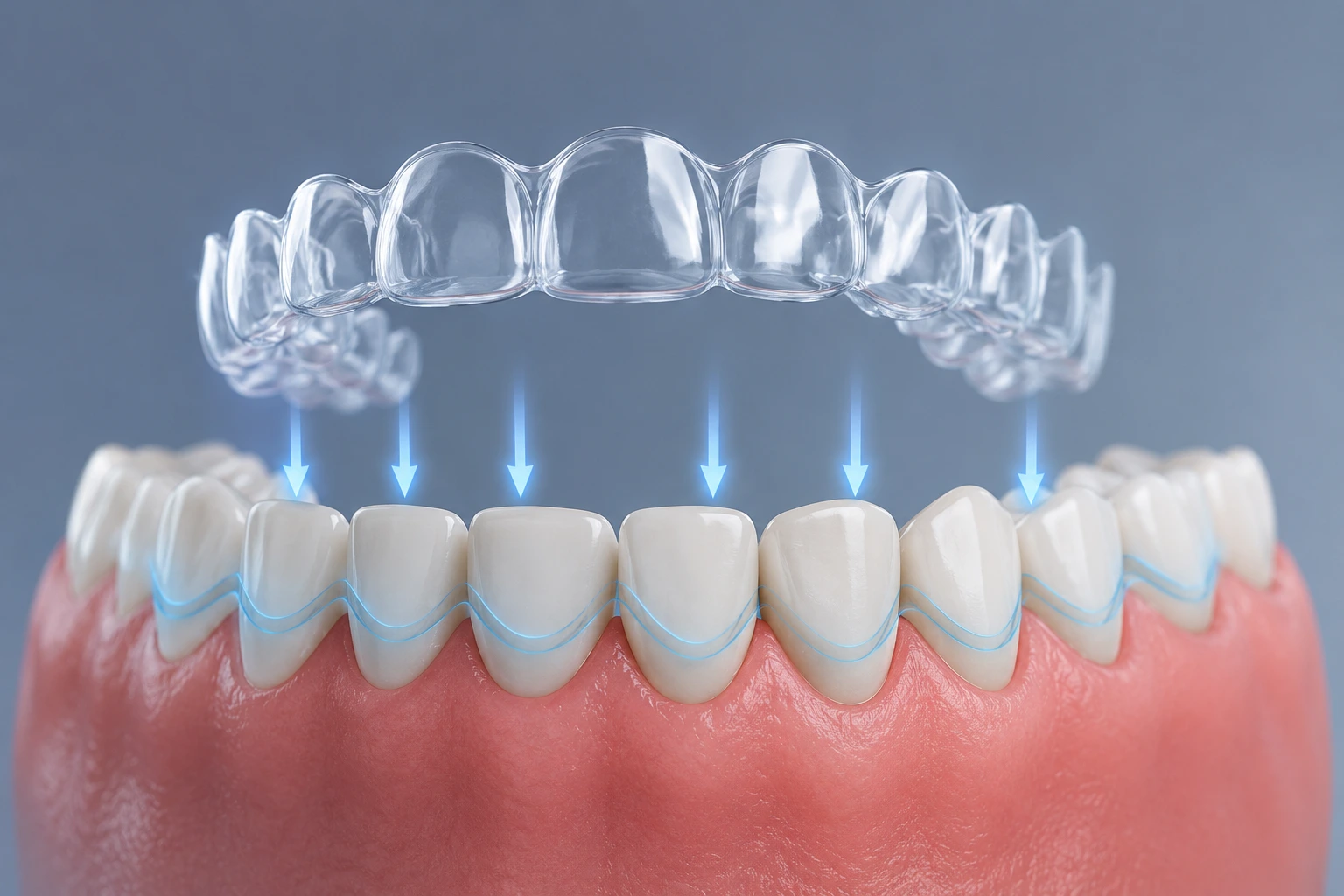
It is a common misconception that aligners are just covers for your teeth. In reality, each custom-fitted aligner is engineered to be slightly different from the current position of your teeth. When you snap the tray into place, the plastic is actually under tension.
That tension translates into a consistent orthodontic force. This force triggers a biological process called bone remodeling. On one side of the tooth, the pressure causes the bone to break down. On the opposite side, a new bone fills in the gap.
Because the trays are made of medical-grade thermoplastic, they can apply this pressure across the entire surface of the tooth. Sometimes, small, tooth-colored bumps called attachments or buttons are placed on the teeth. These act as handles for the aligners, giving the plastic more leverage to perform complex movements like rotations or vertical shifts.
You might wonder why you cannot just wear one tray until your teeth are straight. The answer lies in the safety of your dental roots. Moving teeth too fast can damage the root structure or the surrounding bone.
Each set of removable aligners is typically worn for one to two weeks. During this window, the tray moves your teeth about 0.25mm to 0.33mm. Once that specific movement is complete, you move on to the next tray in the series.
Think of it like a relay race. Each tray carries the baton a little further down the track. By the time you reach the end of your series, which could be 15 trays or 50 depending on your bite alignment needs, those tiny increments have added up to a massive transformation. This is how we ensure enamel safety and root stability.
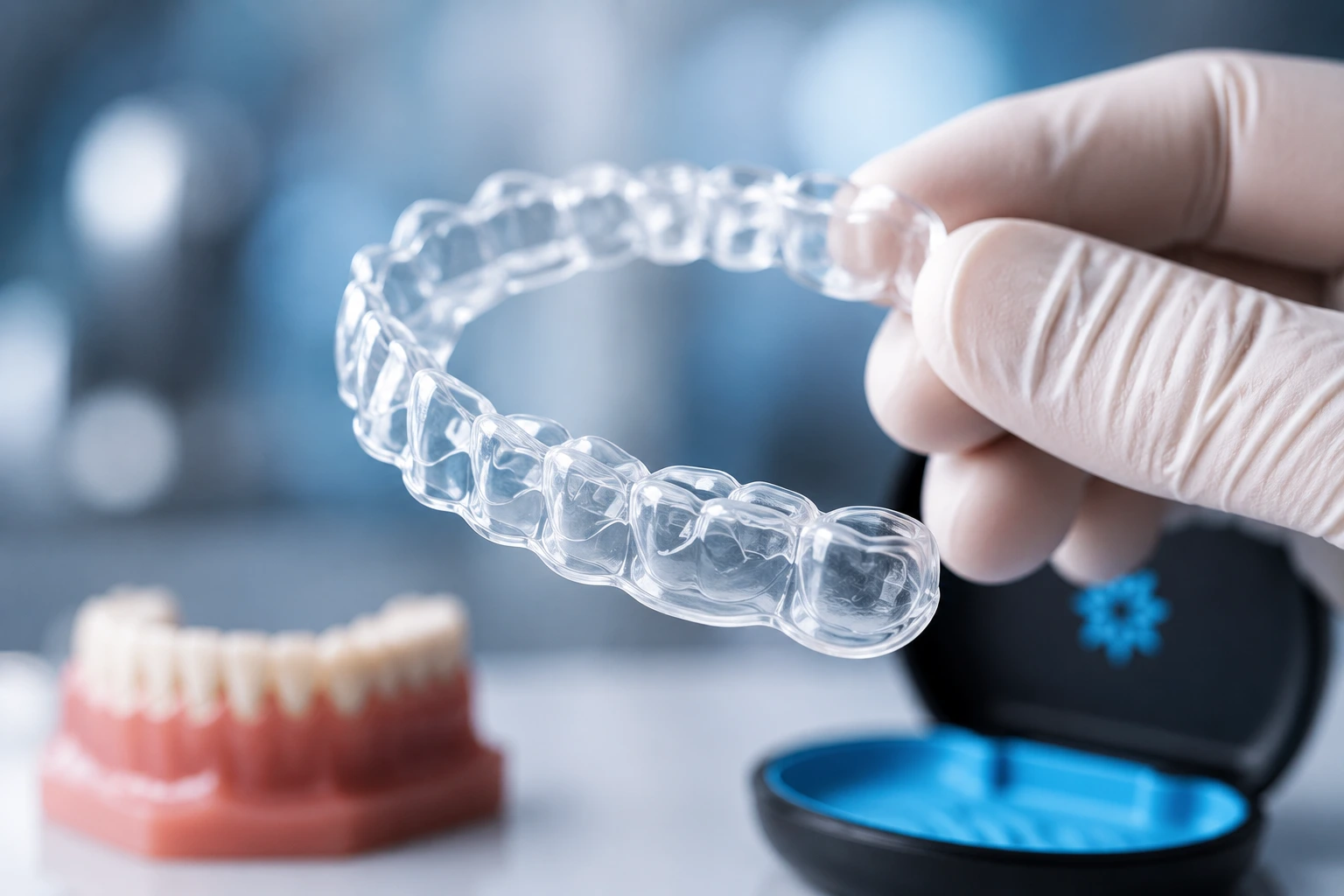
Modern clear aligner therapy is far more advanced than the early versions of the technology. To handle complex cases, we use SmartForce attachments. These are tiny, tooth-colored dots made of composite material that are bonded to your teeth.
These attachments provide an anchor point for the aligners to grip onto. Without them, the smooth plastic might slip. With them, the aligner can exert targeted pressure to rotate a tooth or pull a tooth downward. In more complex cases like bite correction, these mechanics are especially important, which is why overbite treatment with clear aligners depends on attachments for precision.
Furthermore, pressure points can be built into the trays themselves. These small indentations focus force on a specific part of the tooth. This ensures that the orthodontic mechanics are working exactly as intended by the digital design.
One reason so many adults and teens choose this path is the impact on their lifestyle. Because these are removable appliances, you do not have to worry about the forbidden foods list that comes with metal braces. You simply take them out to eat, drink anything other than water, and perform your oral hygiene routine. To keep your trays fresh and spotless, check out how to clean your clear aligners.
However, the magic only works if you wear them. Patient compliance is the most important factor in how well the treatment works. To stay on track, you must wear your trays for at least 22 hours a day.
If you leave them out for too long, your teeth can begin to shift back toward their original positions. This can lead to a tight feeling when you put the tray back in and may even require a mid-course correction or new digital impressions to get back on schedule. Consistent wear is the fastest way to a beautiful smile.
Most patients describe the feeling as a tightness or pressure rather than sharp pain. This is usually most noticeable during the first day of a new aligner tray. Since there are no metal brackets, you avoid the scratches and sores often associated with traditional braces.
Every smile is unique. On average, treatment takes between 12 and 18 months. However, for simple cases, you might see your final results in as little as six months. Your provider will give you a specific timeline during your initial consultation.
It is best to remove them for anything other than plain, cool water. Hot liquids can warp the thermoplastic material, and dark drinks like coffee or tea can stain the plastic, making your invisible aligners very visible.
Yes. Just like with braces, your teeth have a memory and will try to shift back. A retainer ensures that your new straight teeth stay exactly where they belong while the bone fully solidifies around the new positions.
Understanding how clear aligners work takes the mystery out of the process. It is a sophisticated journey that uses 3D imaging, custom manufacturing, and the natural biology of your body to create a functional bite and an aesthetic result.
At Gia Orthodontics, we believe that everyone deserves to feel confident when they smile. Our team uses the latest technology to ensure your treatment is as efficient and comfortable as possible. We focus on the tiny details so you can focus on the big result. For patients seeking treatment options locally, clear aligners in Copper Canyon offer a discreet and customized way to achieve a straighter smile with expert supervision.
Ready to meet your future smile? Contact us today to schedule your consultation and take the first step toward the healthy, confident look you deserve. Your journey starts here!