Posted on May 8, 2026
If you’ve been thinking about getting braces, there’s one question that probably comes to mind right away: how long will I actually have to wear them? It’s a fair question. Nobody wants to walk into treatment without knowing what to expect on the other side.
The truth is, there’s no single answer that fits everyone. Orthodontic treatment timelines are highly individual, shaped by a range of factors unique to each patient’s mouth. But there are solid averages, clear patterns, and expert insight that can help you plan with confidence.
Let’s break it down.
Two people can sit in the same orthodontist’s chair, receive the same type of braces, and walk out with completely different treatment plans. That’s because tooth movement and jaw alignment are deeply personal.
Your teeth have been shaped by genetics, habits, growth patterns, and dental history. Some patients deal with mild crowding that shifts quickly. Others have skeletal misalignment or severe malocclusion that takes considerably more time and precision to correct.
Age also plays a role. Children and teenagers typically respond faster to orthodontic forces because their bones are still developing. Adults can absolutely achieve excellent results, but the process may take a bit longer since the jawbone is fully set.
In some cases, early orthodontic treatment in Northlake TX may be recommended to guide jaw development and simplify future treatment.
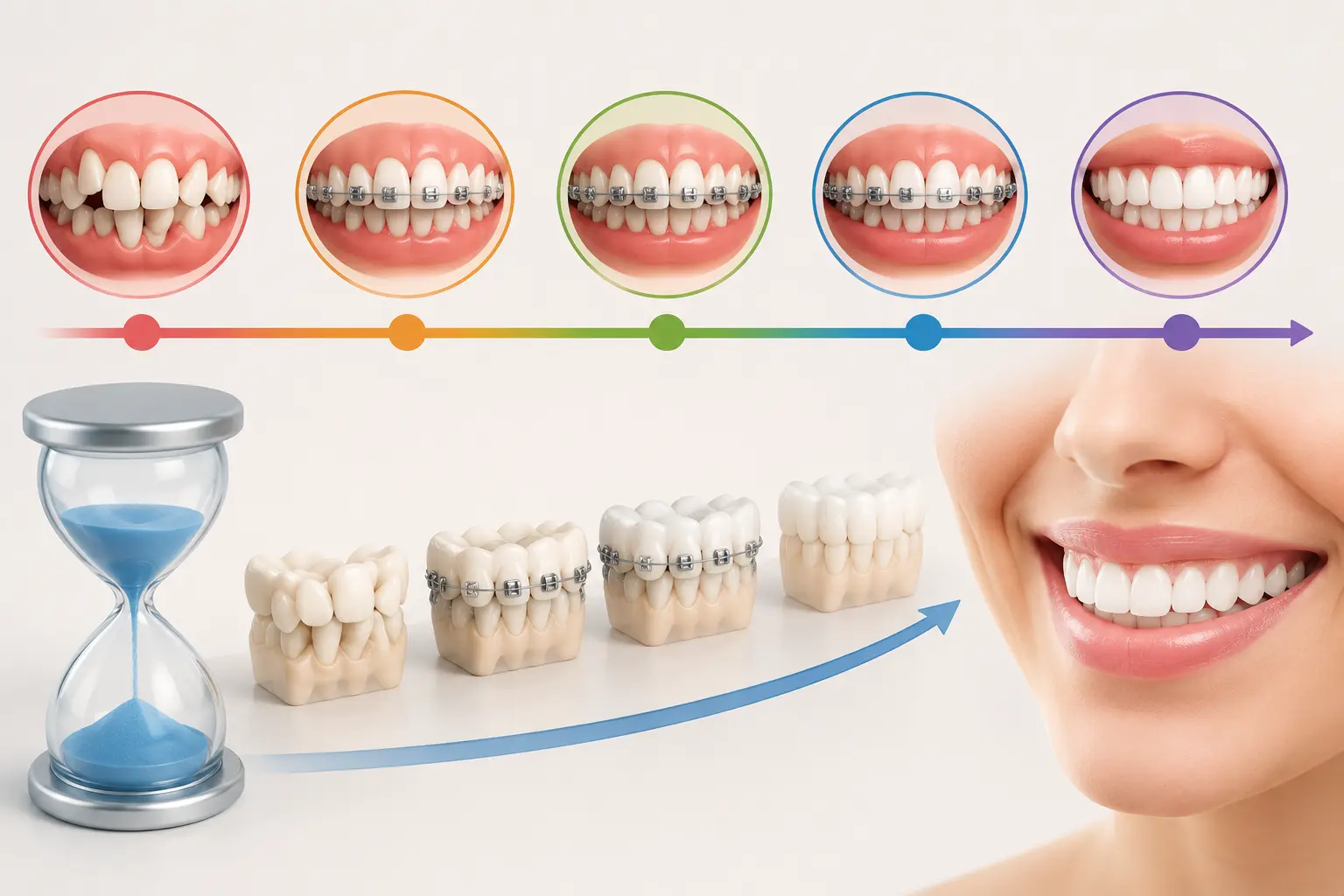
For most patients, braces treatment lasts anywhere from 12 to 36 months. The most commonly cited average is around 18 to 24 months, which covers the majority of moderate cases.
| Case Complexity | Estimated Treatment Time |
|---|---|
| Mild Cases | 6 to 12 months |
| Moderate Cases | 12 to 24 months |
| Complex Cases | 24 to 36+ months |
| Most Common Average | 18 to 24 months |
These are general windows, not guarantees. Your orthodontist will give you a much more precise estimate once they’ve completed a full examination, including X-rays and digital impressions. Keep in mind that teeth start moving within the first few weeks of getting braces. You may notice small changes early on, though the most visible results often come in the middle phase of treatment.
Understanding what drives your timeline helps you be a more active participant in your own treatment. Here are the main factors your orthodontist considers:
Your orthodontist can’t control your biology, but they can set a precise treatment plan that works with it rather than against it.
Not all braces work at exactly the same speed. The type of orthodontic appliance you choose can affect your overall treatment length.
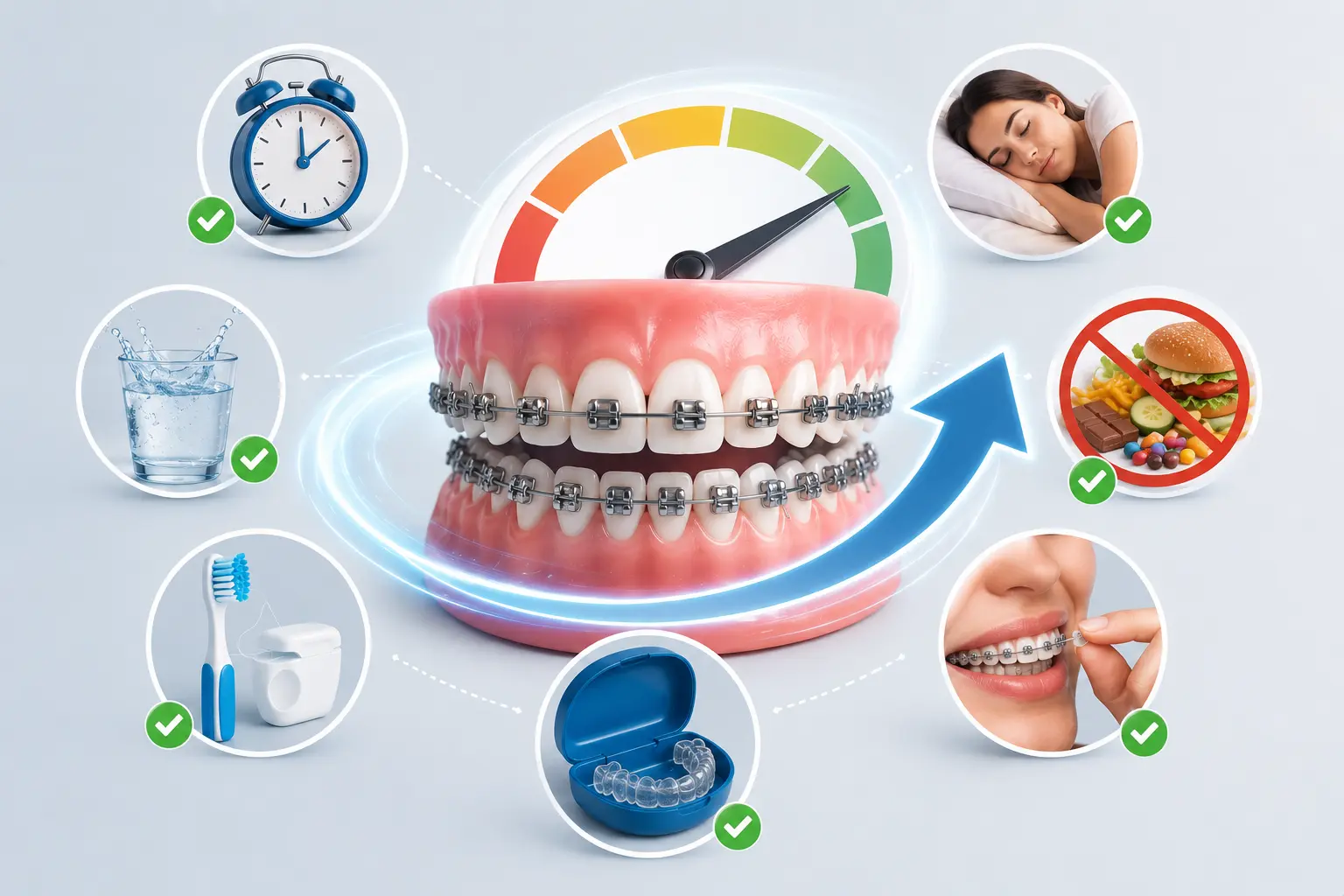
While you can’t rush biology, you can absolutely avoid the most common reasons treatment gets delayed. Here’s what actually makes a difference:
The patients who finish fastest are almost always the ones who follow their orthodontist’s guidance closely and stay proactive throughout treatment.
Getting your braces removed is a big moment, but it’s not the finish line. Retention is a critical phase that most patients underestimate.
Once braces are removed, teeth have a natural tendency to shift back toward their original positions. This is called orthodontic relapse, and the only way to prevent it is to wear a retainer as prescribed.
Most patients are given a retainer to wear full-time initially, then only at night long-term. Some people end up wearing retainers indefinitely, which is perfectly normal. Skipping your retainer after months of braces is one of the most common regrets patients share. Attending regular orthodontic checkups after treatment is equally important for maintaining your new smile.
Think of retainers not as an afterthought but as the final step that protects everything you worked for.
In mild cases, yes. Some patients with minimal crowding or spacing issues complete treatment in as little as six months. However, this is not typical for most people. The majority of orthodontic cases require 12 to 24 months. Your orthodontist will give you a realistic estimate based on your specific situation after a full evaluation.
Generally, yes. Teenagers have more active bone growth, which allows teeth to move more efficiently under orthodontic pressure. That said, adults can achieve excellent results. The difference is usually a matter of weeks to months rather than years. Adult treatment is absolutely effective and very common today.
Teeth will begin shifting back toward their original positions, a process called orthodontic relapse. How quickly this happens varies by person, but it can start within weeks of stopping retainer use. In some cases, patients need to go back into braces or aligners to correct the shifting. Wearing your retainer as directed is the simplest way to protect your results long-term.
You can avoid the common delays by keeping every appointment, maintaining good oral hygiene, wearing elastics as instructed, and protecting your brackets from damage. Some offices also offer supplemental technologies that may support faster tooth movement. Talk to your orthodontist about what options are available and appropriate for your case.
Most patients begin noticing small changes within the first four to eight weeks of treatment. Visible progress often becomes more noticeable after three to six months. The most dramatic results typically appear in the middle and later stages of treatment as the teeth approach their final positions.
Every smile is different, and your treatment timeline should be built around your specific needs, not a generic estimate found online. The best way to get a real answer is to sit down with an experienced orthodontist who can evaluate your teeth, your bite, and your goals. At Gia Orthodontics, the best orthodontist in Bartonville, we take the time to understand what you’re working toward and build a plan that gets you there efficiently and comfortably. Whether you’re exploring traditional braces, ceramic braces, or clear aligners, our team is here to guide you at every step.