Posted on August 5, 2026
Every patient asks some version of the same question after finishing treatment: how long do retainers last before they need to be replaced? It is a fair question, because unlike braces, retainers do not come with a set finish line. They are meant to be part of your routine indefinitely, which raises the natural follow-up of knowing when a set has reached the end of its useful life.
There is no single number that applies to every patient, but there are clear patterns, warning signs, and daily habits that shape the answer. Below, we walk through all three so you know exactly what to watch for.
Ask five orthodontic patients how long retainers last and you will likely get five different answers — and all of them could be correct for that person’s situation. Lifespan depends on the retainer material, how consistently it is worn, and how carefully it is cleaned and stored between wears. Understanding these factors can also help you plan for retainer cost when it is time for a new one.
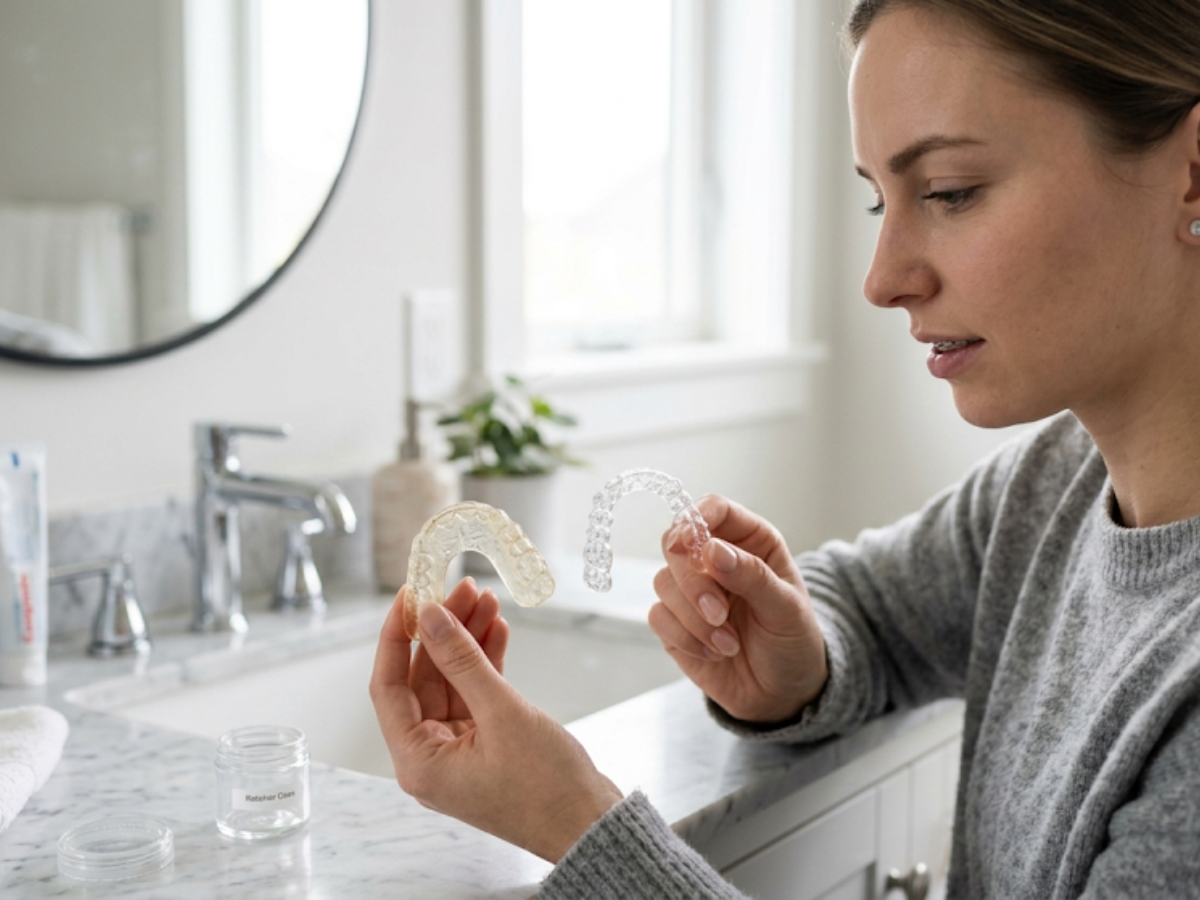
Clear, removable retainers, like the Essix-style retainers we provide through our Retainer Assurance Program, typically hold up well for one to two years of nightly wear, and sometimes longer with excellent care. Patients who wear theirs less consistently, or who are rougher on them day to day, often see that window shrink.
In the first six months after treatment, most retainers still look and fit nearly the same as the day they were delivered. This is the period when nightly wear matters most, since your teeth are still settling into their new positions.
Between six months and roughly a year, subtle changes start to appear. The plastic may lose a bit of its original clarity, and the fit may feel slightly different as your bite continues to stabilize. These changes can be among the common retainer replacement signs that indicate it may be time to have your retainer evaluated.
Beyond the one-year mark, wear becomes more noticeable. This is typically when patients start asking whether it is time for a new retainer rather than simply cleaning the one they already have.
Rather than watching the calendar, watch for physical signs that your current retainer is nearing the end of its useful life.
Certain everyday choices make a bigger difference than most patients expect. Storing your retainer in its case every time it comes out — rather than wrapping it in a napkin or leaving it loose — prevents a large share of accidental damage.
Heat is another major factor. Leaving a retainer in a hot car, running it under hot water, or setting it near a dishwasher can permanently warp clear plastic, cutting its lifespan short no matter how new it is.
Consistency of wear also plays a role. Retainers that go in and out frequently, rather than staying in overnight as directed, experience more flexing and stress over time, which speeds up wear. Removing your retainer with both hands, instead of twisting it off from one side, also helps prevent cracks.
Continuing to wear a worn-out or ill-fitting retainer risks more than comfort. Teeth naturally want to shift over time, and a retainer that no longer fits snugly is no longer holding your smile in place.
Wait too long, and your next retainer has to account for movement that already happened rather than simply maintaining the position you finished treatment with. Addressing warning signs early keeps your smile where it is — and usually saves you from a more involved correction later.
Because retainer lifespan is somewhat unpredictable, we built our Retainer Assurance Program to take the guesswork out of replacement timing. Our Smile Protection Plan covers multiple retainer sets over several years, so patients never have to weigh comfort against cost when a retainer starts showing its age.
Not necessarily, though teenagers often remove retainers more frequently for sports and meals, which can add extra handling wear over time.
Minor fit issues can sometimes be adjusted, but cracks or significant warping usually mean a new set is the safer, more reliable option.
Typically no. A well-cared-for retainer performs consistently regardless of how many years have passed since treatment ended.
Some change is expected as the plastic ages, but a noticeable change in fit deserves an evaluation rather than a shrug.
Knowing how long retainers last helps you plan ahead instead of reacting to a surprise crack or fit issue. Watching for the warning signs above, paired with simple daily habits, stretches the life of every set you invest in.
If your retainer seems to be nearing the end of its life, our Bartonville team is glad to take a look and help you plan the next step with confidence.