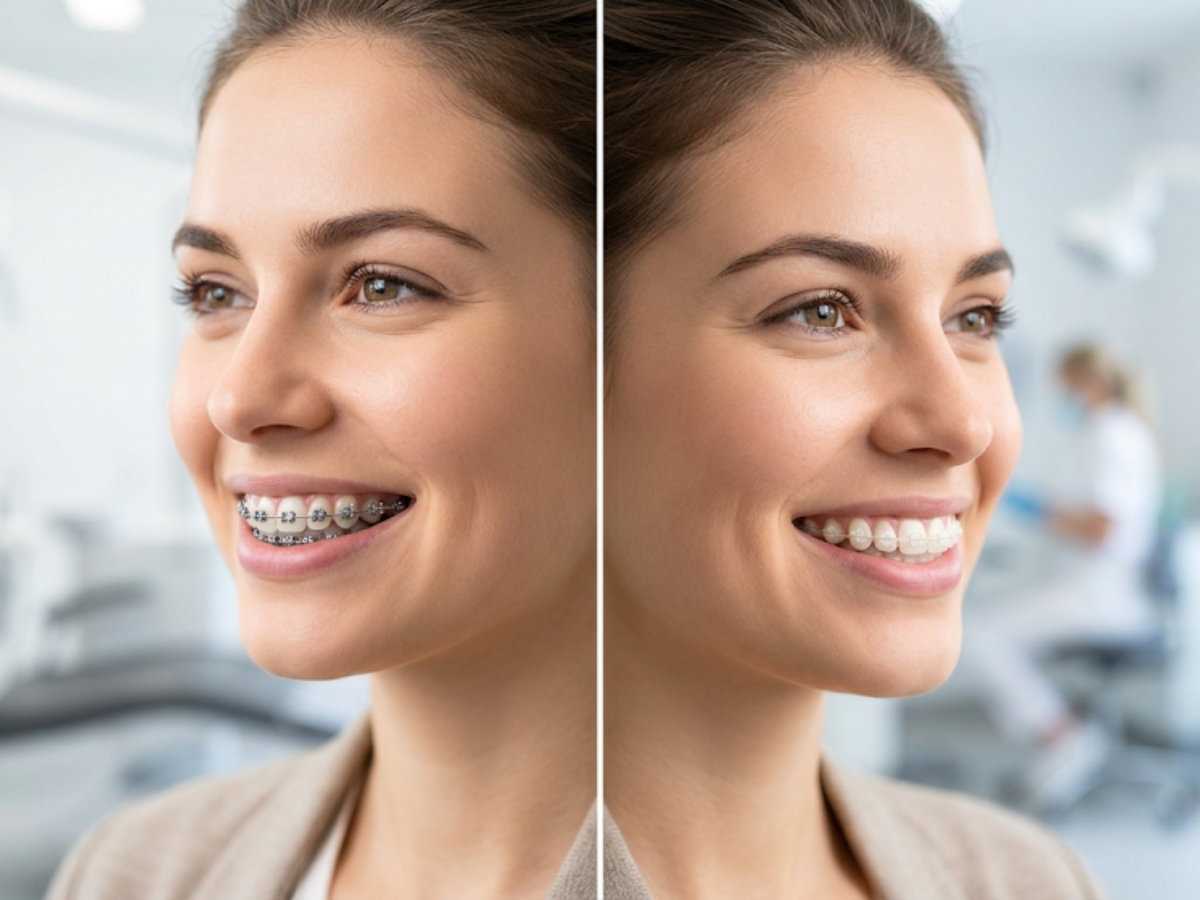
Posted on August 18, 2026
If you’re considering braces, you may be wondering whether traditional metal braces or less noticeable ceramic braces are the better choice.
When comparing metal braces vs. ceramic braces, both can be effective options for straightening teeth and correcting bite problems. The biggest differences generally come down to appearance, durability, cost, maintenance, and whether a particular type of braces is appropriate for your orthodontic needs.
There isn’t one option that’s best for everyone. Understanding the differences can help you have a more informed conversation with your orthodontist about which type of braces makes the most sense for you.
Metal and ceramic braces work on the same basic principle. Brackets are attached to the teeth and connected by an archwire. Your orthodontist uses the appliance to apply controlled forces that gradually move your teeth toward their planned positions.
The primary difference is the material and appearance of the brackets.
Traditional metal braces typically use small stainless-steel brackets attached to the teeth and connected by an orthodontic archwire.
Depending on the system, elastic ties or other mechanisms may be used to hold the wire in place.
Modern metal braces are smaller and more streamlined than many people remember from the past. They’re durable, versatile, and can be used to treat a wide range of orthodontic problems in children, teenagers, and adults. If you experience discomfort or a broken bracket during treatment, knowing when to seek braces emergency care can help prevent delays.
Ceramic braces work similarly to traditional braces but use clear or tooth-colored brackets designed to blend more naturally with your teeth.
This makes ceramic braces less noticeable than traditional metal braces, which can appeal to teenagers and adults who want a more discreet orthodontic option.
Although the brackets are ceramic, the archwire and certain other components of the appliance may still contain metal.
Here’s how the two options generally compare.
This is often the biggest difference for patients.
Metal braces are clearly visible on the teeth. Patients may also be able to choose different colored elastic ties, allowing them to personalize their braces.
Ceramic braces use clear or tooth-colored brackets that blend with the teeth and are typically less noticeable from a distance.
If having less visible braces is one of your highest priorities, ceramic braces may have an advantage.
Metal braces are generally the more economical option.
Ceramic brackets use different materials and may cost more than traditional metal braces. However, the exact price difference varies by orthodontic practice and individual treatment plan.
Your total orthodontic cost also depends on the complexity and length of treatment rather than bracket material alone.
Both types of braces are designed to withstand normal orthodontic treatment.
Metal brackets are generally very durable. Ceramic brackets are also strong but can be more brittle than metal and may be more susceptible to damage under certain circumstances.
Regardless of which type you choose, avoiding foods that can damage your braces is important.
Both metal and ceramic braces can effectively move teeth.
You may hear that ceramic braces always take longer than metal braces, but that’s an oversimplification.
Treatment length depends on factors such as:
Your orthodontist can tell you whether ceramic brackets are appropriate for your treatment without compromising your treatment goals.
Both metal and ceramic braces can cause temporary pressure, tenderness, or irritation, especially after they’re first placed or following certain adjustments.
Bracket size and shape can vary between different orthodontic systems, so it isn’t accurate to say that one material will always be more comfortable than another.
Most patients gradually become accustomed to their braces.
Traditional metal braces can be a fun option for patients who enjoy choosing colored elastic ties at their appointments.
Ceramic braces are designed with discretion in mind. Clear or tooth-colored components help keep the appliance less noticeable.
For patients who prioritize personalization, metal braces may be more appealing. Understanding your expected braces treatment time can also help you choose the option that fits your schedule and orthodontic goals.
For patients who prioritize subtlety, ceramic braces may be preferable. Another option worth discussing with your orthodontist is self-ligating braces, which use specialized brackets designed to hold the archwire without traditional elastic ties.
Metal braces offer several benefits:
The primary disadvantage is appearance.
Metal brackets and wires are more noticeable than ceramic brackets. For patients who want their orthodontic treatment to be as discreet as possible, this may be an important consideration.
Ceramic braces can offer:
They’re particularly appealing to adults and teenagers who prefer a more subtle appearance.
There are also a few tradeoffs to consider:
Your orthodontist can determine whether ceramic braces are appropriate for your particular teeth and bite.
The ceramic brackets themselves are generally designed to resist staining, but clear or tooth-colored elastic ties around the brackets may discolor.
Coffee, tea, certain strongly colored foods and beverages, and tobacco products can contribute to discoloration.
Good oral hygiene and following your orthodontist’s recommendations can help keep ceramic braces looking their best.
The right choice depends on your orthodontic needs and personal priorities.
Ceramic braces may be worth considering if you want fixed braces that are less noticeable.
The clear or tooth-colored brackets blend more naturally with your teeth, making them popular among adults and appearance-conscious teenagers.
Metal braces may have an advantage because metal brackets are highly durable and less brittle than ceramic brackets.
This may be an important consideration for some patients depending on their lifestyle and treatment needs.
Traditional metal braces are generally the more affordable of the two options.
However, orthodontic treatment costs vary, so the best way to understand the difference is to compare the options during your consultation.
You can participate in sports with either metal or ceramic braces.
Regardless of which type you choose, protecting your teeth and appliances is important. Your orthodontist can recommend an appropriate mouthguard for sports and other activities where there is a risk of injury to the mouth.
Tell your orthodontist before treatment if you have a known or suspected metal allergy or sensitivity.
Choosing ceramic brackets doesn’t necessarily eliminate exposure to metal because archwires and other orthodontic components may still contain metal.
Your orthodontist can review your history and determine which materials and orthodontic appliances are appropriate for you.
Good oral hygiene is important with either type of braces.
Brackets and wires create additional spaces where food and plaque can collect.
Follow your orthodontist’s brushing instructions and clean carefully around each bracket, along the gumline, and around the wires.
Cleaning between your teeth remains important during orthodontic treatment.
Your orthodontist may recommend floss threaders, interdental brushes, water flossers, or other tools to make cleaning around braces easier.
Hard, sticky, and chewy foods can potentially damage brackets and wires.
Follow the food recommendations provided by your orthodontist to reduce your risk of broken appliances and unplanned repair appointments.
If you have ceramic braces, pay particular attention to clear or tooth-colored elastic ties, which can become discolored.
Regular brushing and limiting foods, beverages, and habits associated with staining can help maintain their appearance.
If you participate in sports where your mouth could be injured, use a mouthguard appropriate for orthodontic treatment.
This helps protect your teeth, lips, cheeks, and braces.
Neither option is universally better. Metal braces offer excellent durability and are generally more affordable, while ceramic braces provide a less noticeable appearance. The better option depends on your orthodontic needs and personal priorities.
Ceramic braces can effectively move teeth when they’re appropriate for the patient’s orthodontic needs. Your orthodontist can determine whether ceramic braces are suitable for your specific treatment plan.
Not necessarily. Treatment time depends on your orthodontic problem, treatment plan, biology, and cooperation during treatment. Bracket material is only one factor.
Ceramic braces generally cost more than traditional metal braces, although the exact difference varies by practice and treatment plan.
The ceramic brackets themselves are typically stain-resistant, but clear or tooth-colored elastic ties may discolor from certain foods, beverages, or tobacco use.
Ceramic brackets are strong enough for orthodontic treatment but are more brittle than metal brackets and may be more susceptible to chipping or damage in certain circumstances.
Potentially, yes. Age alone doesn’t determine whether someone should have metal or ceramic braces. Your orthodontist will consider the patient’s orthodontic needs, habits, treatment plan, and ability to care for the appliance.
Don’t assume ceramic braces automatically eliminate metal exposure. Although the brackets may be ceramic, wires and other components can contain metal.
Tell your orthodontist about any known metal or nickel allergy before treatment so appropriate materials can be considered.
Choosing between metal and ceramic braces doesn’t have to be complicated. Both can be excellent orthodontic treatment options, and the right choice depends on your teeth, bite, lifestyle, budget, and preferences.
If you’re considering braces, contact our team at Gia Orthodontics, serving patients in Bartonville and Argyle, TX. We can evaluate your smile, explain which treatment options are appropriate for you, and help you compare metal and ceramic braces based on your individual needs.
Whether appearance, durability, cost, or convenience matters most to you, our team at Gia Orthodontics can help you choose an orthodontic treatment that fits your goals.
Ready to compare your options? Contact Gia Orthodontics today to schedule a braces consultation in Bartonville or Argyle, TX.