Posted on August 18, 2026
If you’re considering braces, you may hear terms such as traditional braces and self-ligating braces and wonder what actually separates the two.
Both systems use brackets and archwires to gradually move your teeth into their planned positions. The main difference is how the wire is held inside each bracket.
That design difference can affect how your orthodontist changes wires and manages your treatment, but understanding the braces process can help you know what to expect throughout your orthodontic journey.
Here’s what you should know when comparing self-ligating braces vs. traditional braces.
Both traditional and self-ligating braces apply controlled orthodontic forces to move teeth.
The major difference is the bracket’s ligation system—the mechanism that keeps the archwire connected to the bracket.
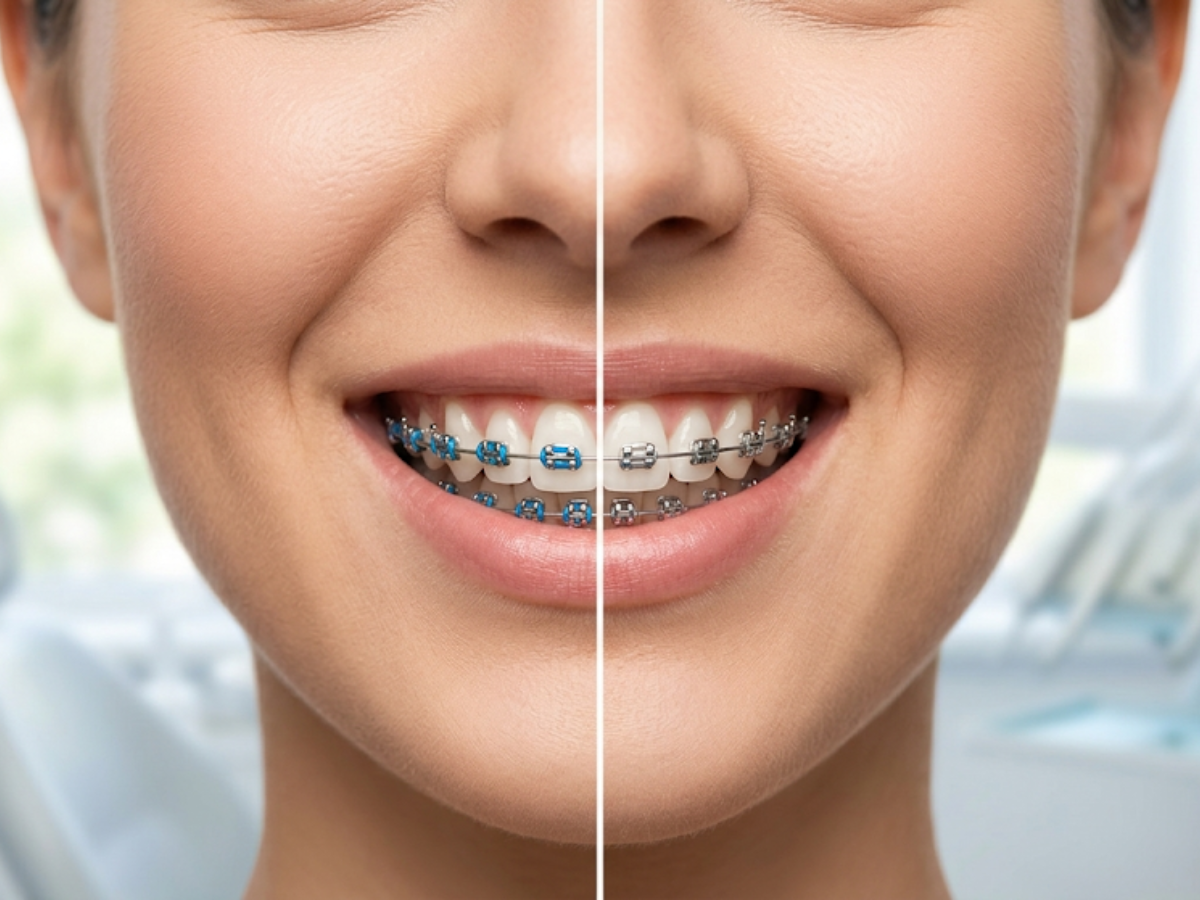
Traditional braces use brackets attached to each tooth with an archwire running through them.
The wire is commonly held in place using small elastic ties or, in some cases, thin metal ligatures.
Elastic ties can often be changed to different colors, which is especially popular among children and teenagers who want to personalize their braces.
Traditional braces have been used successfully for many years and can treat a wide range of orthodontic problems.
Self-ligating braces use brackets with a built-in clip, gate, or sliding door that holds the orthodontic wire in place.
Because the bracket itself secures the wire, separate elastic ligatures aren’t required for each bracket.
Self-ligating brackets may be made from metal or, in some systems, tooth-colored ceramic braces materials.
Self-ligating systems can generally be divided into two designs.
Passive brackets use a door or clip that closes around the archwire without actively pressing against it in certain wire sizes.
This may allow more freedom for the wire to move within the bracket during particular stages of treatment.
Active self-ligating brackets use a spring-like clip that can contact the archwire and apply pressure against it.
The exact behavior of either system varies depending on the bracket design, wire size, and stage of treatment.
These technical differences are primarily treatment-planning considerations for your orthodontist rather than something patients need to choose on their own.
Traditional braces commonly use elastic or metal ties to secure the wire to the bracket.
Self-ligating braces use a built-in mechanism to hold the wire.
This can make opening and closing the brackets during certain appointments more efficient because individual elastic ties don’t need to be removed and replaced.
Certain self-ligating bracket and wire combinations can produce less friction in laboratory settings than conventional brackets with elastic ligatures.
However, tooth movement inside the mouth is more complicated than friction alone.
The amount of movement depends on factors such as:
Lower bracket-wire friction therefore does not automatically mean faster orthodontic treatment.
One potential practical advantage of self-ligating brackets is that changing or engaging archwires may take less chairside time because the orthodontist doesn’t need to remove and replace individual elastic ties.
However, total appointment length depends on what needs to be done during that visit.
Some appointments involve much more than simply changing a wire, so patients shouldn’t expect every self-ligating braces visit to be substantially shorter.
Self-ligating braces are sometimes marketed as requiring fewer orthodontic visits.
However, research has not consistently demonstrated that self-ligating brackets reduce the total number of appointments required during treatment.
Your orthodontist will determine how often you need to be seen based on your treatment plan—not simply the type of bracket you wear.
Some patients assume lower friction means self-ligating braces are less painful.
Current evidence does not consistently support that claim.
Both traditional and self-ligating braces can cause temporary pressure or tenderness, particularly when treatment begins or after certain adjustments.
Studies comparing the two systems generally have not found a consistent, clinically meaningful difference in pain.
Because self-ligating brackets don’t require elastic ties around every bracket, some patients may find there are fewer components to clean around.
However, both systems still have brackets and wires that can trap food and plaque.
Research comparing oral hygiene and periodontal health between the two systems has produced mixed results, and self-ligating braces should not be assumed to automatically produce better oral health.
Excellent brushing and cleaning between the teeth remain essential with either type.
The cost difference between self-ligating and traditional braces varies considerably between orthodontic practices.
Self-ligating brackets may cost more in some practices because of the bracket system being used, while other practices may price different types of braces similarly.
It’s better to compare the actual treatment fee during your consultation rather than assume self-ligating braces will always cost significantly more.
This is one of the most common claims made about self-ligating braces—and one that needs some clarification.
Research has not consistently shown that self-ligating braces reduce total orthodontic treatment time compared with conventional braces.
While certain bracket systems may offer mechanical advantages during specific stages of treatment, the bracket itself is only one part of a much larger treatment process.
Your overall treatment time depends more heavily on:
For most patients, the skill and treatment plan of the orthodontist matter much more than whether a bracket has a built-in door or an elastic tie.
Not necessarily.
Both systems apply orthodontic forces that can make teeth temporarily tender.
Clinical studies comparing traditional and self-ligating appliances have generally found no consistent difference in overall pain or discomfort.
Individual experiences still vary. One patient may prefer the shape or feel of a particular bracket system, while another may notice little difference.
They may feel somewhat easier for some patients because there are no elastic ties surrounding each bracket.
However, that doesn’t mean self-ligating braces require less oral hygiene.
Patients still need to carefully clean:
Regardless of bracket type, poor oral hygiene during braces treatment can increase the risk of plaque buildup, gum inflammation, cavities, and white spot lesions.
Traditional braces can offer:
Traditional braces require ligatures to hold the wire in place.
Elastic ties can collect plaque and may discolor between appointments depending on foods and beverages consumed.
Changing individual ligatures may also take a little additional chairside time during certain appointments.
Potential advantages include:
Self-ligating braces also have limitations:
There isn’t a universal winner.
Both traditional and self-ligating braces can produce excellent orthodontic results when used appropriately.
The better choice depends on your diagnosis, the orthodontist’s treatment approach, the type of tooth movements required, available bracket systems, cost, and your personal preferences.
Don’t choose self-ligating braces solely because you’ve heard they work faster.
Current evidence doesn’t show a consistent overall treatment-time advantage.
Instead, ask your orthodontist for an estimated treatment timeline based on your specific teeth and bite.
Self-ligating brackets may allow faster wire changes during certain visits.
However, that doesn’t necessarily mean you’ll require fewer appointments overall.
Traditional braces are often a fun choice for patients who enjoy changing their elastic colors at appointments.
Ask for the actual treatment fees for the options available at your orthodontic practice.
Don’t assume one system will always be cheaper because pricing varies by office and treatment plan.
Whichever type you choose, good daily habits matter much more than the bracket mechanism.
Clean around every bracket and along the gumline thoroughly.
Your orthodontist may recommend brushing after meals when possible in addition to your normal oral-hygiene routine.
Floss threaders, interdental brushes, orthodontic floss, or other recommended tools can help clean underneath wires and between teeth.
Hard, sticky, and chewy foods can damage either traditional or self-ligating braces.
Follow your orthodontist’s food recommendations to reduce the risk of broken brackets and unplanned repair visits.
Regular appointments allow your orthodontist to monitor your progress and make necessary treatment adjustments.
The schedule will depend on your individual treatment plan rather than simply which type of bracket you have.
If a bracket becomes loose, a wire breaks, or something begins causing significant irritation, contact your orthodontic office for guidance.
Neither system has been consistently shown to produce faster overall orthodontic treatment.
Treatment speed depends more heavily on your diagnosis, treatment plan, biology, required tooth movements, and cooperation during treatment.
Research has not consistently found self-ligating braces to be less painful than traditional braces.
Temporary pressure and soreness can occur with either system.
Not necessarily.
Although opening and closing self-ligating brackets may make certain procedures quicker, studies have not consistently shown that patients need fewer total orthodontic visits.
The absence of elastic ties may make the brackets feel simpler to clean around for some patients, but research has not established a clear overall oral-hygiene advantage.
Both systems require excellent brushing and cleaning between the teeth.
They may cost more at some orthodontic practices, while other practices may price them similarly to traditional braces.
Your actual cost depends on your orthodontist and treatment plan.
Yes, self-ligating braces can be used for many types of orthodontic treatment.
Traditional braces can also effectively treat complex cases. Your orthodontist will determine which appliance and treatment mechanics are best suited to your diagnosis.
Technically, an orthodontist may be able to change bracket systems, but doing so isn’t routinely necessary.
If there is a clinical reason to change your appliance, your orthodontist can discuss whether the benefits justify rebonding the brackets.
The biggest difference between traditional and self-ligating braces is how the archwire is held inside the bracket. Beyond that, many of the advertised advantages of self-ligating systems including faster treatment, fewer appointments, better hygiene, and less discomfort—haven’t been consistently demonstrated in clinical research.
The right braces for you should therefore be based on your orthodontic diagnosis and treatment plan rather than marketing claims about a particular bracket system.
If you’re considering braces, contact Gia Orthodontics, serving patients in Bartonville and Argyle, TX. Our team can evaluate your teeth and bite, explain the treatment options appropriate for your smile, and help you understand the differences between the braces systems available to you.
Whether you’re focused on appearance, convenience, cost, or treatment goals, our team at Gia Orthodontics can help you make an informed decision based on your individual needs.
Ready to explore your braces options? Contact Gia Orthodontics today to schedule a consultation in Bartonville or Argyle, TX.