Posted on July 16, 2026
If you have heard your orthodontist mention laser technology and wondered, what is laser treatment for teeth, you are not alone. More patients are asking about this technology because it offers a gentler, faster way to treat gums and support orthodontic care.
We use dental lasers every day to help patients feel more comfortable during treatment. In this blog, we break down what laser dentistry involves, where it is used, and why it might be the right choice for your smile.
Understanding the science behind this technology can also help you feel more confident as you walk into your next appointment. Knowledge is the first step toward a stress-free dental visit.
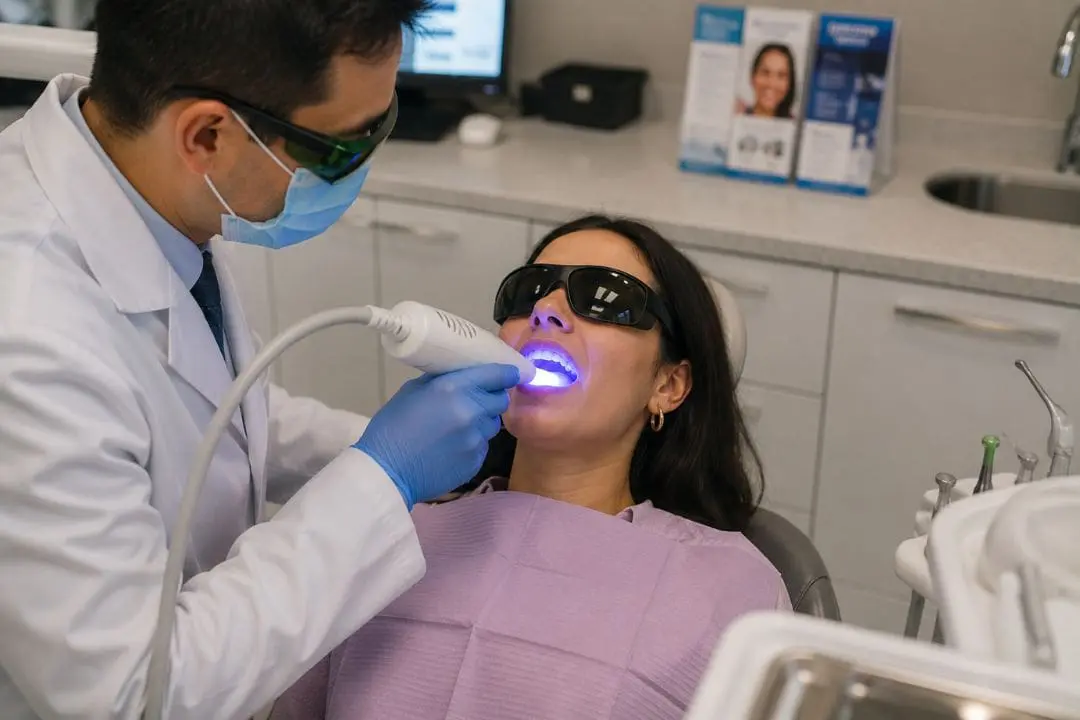
Laser treatment for teeth is a modern dental technique that uses a focused beam of light to treat soft tissue, including the gums. Unlike traditional scalpels, soft tissue lasers work with precision while sealing blood vessels, resulting in less bleeding, reduced swelling, and a faster, more comfortable recovery.
A dental laser emits a concentrated wavelength of light that targets soft tissue without damaging the surrounding area. The energy gently removes or reshapes gum tissue in seconds. Because the laser cauterizes as it works, most patients need only a topical numbing gel instead of a full injection. This makes the experience far less intimidating, especially for children and nervous patients.
Most orthodontic offices rely on a soft-tissue laser, which is designed specifically for gums and other oral tissues rather than for enamel or bone. This keeps the focus on comfort and precision during your treatment.
Hard tissue lasers are also used, but less often in orthodontic settings. Knowing the difference helps you understand exactly what your provider means when they mention laser treatment during a visit.
Laser treatment supports several stages of orthodontic and general dental care. Here are the most common ways we use it.
Benefits of Laser Treatment for Teeth
Understanding what laser treatment for teeth is also means understanding why so many patients and providers prefer it over older methods. The benefits go beyond comfort.
These advantages make laser dentistry a strong option for patients who feel anxious about dental visits or who want a quicker path back to their normal routine.
Laser treatment can benefit children, teens, and adults, especially those with braces. It may be recommended for a gummy smile, slow-erupting teeth, recurring mouth sores, or mild gum irritation. However, not every case is suitable for laser treatment. During your consultation, we assess your gum health, treatment goals, medical history, and current medications to determine if this approach is the safest and most effective option for your needs.
Most laser procedures take only a few minutes and are completed in a single visit. You may notice mild sensitivity for a day or so, similar to a small cold sore, which typically resolves quickly.
We usually recommend a soft diet and gentle rinsing for the first day. Most patients return to normal activities immediately, with little to no downtime. If you have questions after your appointment or notice anything unusual, we are always just a phone call away. Our goal is to make sure your recovery is as smooth as the procedure itself.
Now that you know what laser treatment for teeth is and how it supports a healthier, more comfortable orthodontic journey, the next step is to find out if it is right for you. Our team is here to walk you through every option with care and honesty.
Schedule your consultation with us today and discover whether laser treatment or in-office laser whitening is the right option to help you achieve a healthier, brighter, and more confident smile.
Most patients feel little to no pain. A topical numbing gel is usually enough, and discomfort afterward is mild and short-lived.
Most soft tissue laser procedures are completed within a single appointment, often in just a few minutes per site.
Yes, exposing slow-erupting teeth with a laser lets us place brackets sooner, helping keep your treatment plan on track.
No, it also helps with tooth exposure, irritation from braces, and improving gum health alongside cosmetic smile goals.
Yes, it is considered safe and minimally invasive, making it a comfortable option for younger orthodontic patients.