Posted on August 5, 2026
Just clean it like you cleaned your aligners” is advice patients repeat to each other constantly, and it is only partly true. Once treatment ends and a retainer takes over, many people assume that cleaning Invisalign retainers works exactly the way it did during active treatment. In reality, a few details change once that piece of clear plastic switches jobs from moving your teeth to holding them in place.
Get the cleaning routine wrong, and you risk clouding, warping, or cracking a retainer meant to last for years, not months. Here is what actually works — and what quietly ruins retainers faster than most patients realize.
Many patients use “Invisalign retainer” to describe any clear, removable retainer they received after finishing clear aligner treatment, whether it came from Invisalign itself (such as Vivera retainers) or a similar clear material like the Essix-style retainers we provide through our Retainer Assurance Program. The guidance below applies to all of these smooth, clear plastic retainers, regardless of brand.
What matters more than the brand name is the material. Thin, clear plastic responds differently to heat, pressure, and certain chemicals than the acrylic-and-wire retainers some patients have seen elsewhere, so treating it accordingly protects both its clarity and its fit. If you want to clean retainers effectively, use gentle methods that avoid damaging the clear plastic.
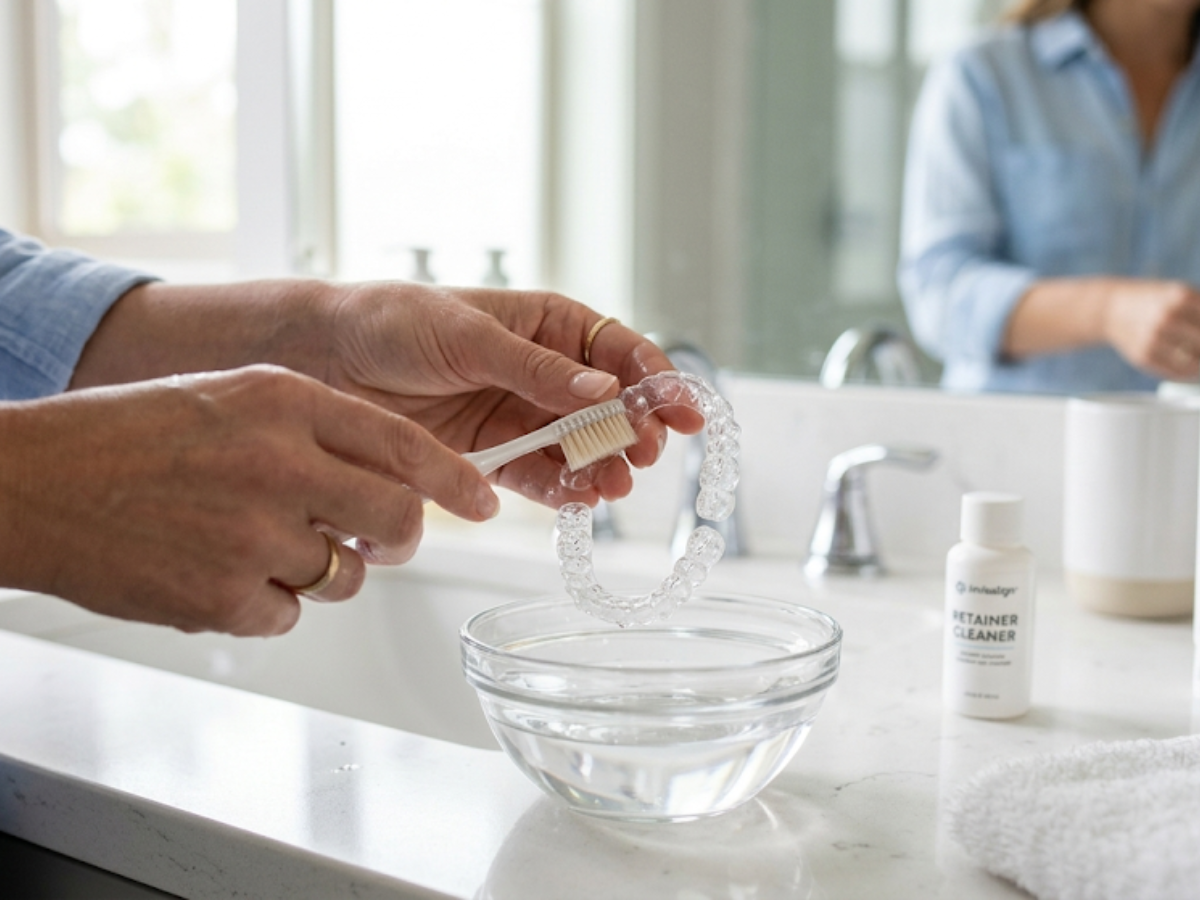
A soft-bristle toothbrush, used with lukewarm water and a small amount of mild, unscented soap, remains the safest daily tool. Brushing gently across every surface, including the ridges along the inside, removes the plaque film that builds up after even a single day of wear.
A short soak two or three times a week adds a deeper level of clean that brushing alone tends to miss. A dedicated retainer or denture cleaning solution — or lukewarm water with a cleaning tablet made for clear appliances — dissolves buildup without scratching the surface the way some other methods can. If your appliance becomes damaged or no longer fits properly, you may need to replace Invisalign retainer to maintain a comfortable, secure fit.
Rinsing thoroughly before the retainer goes back in your mouth finishes the routine. Leftover cleaning solution can leave an unpleasant taste or mild irritation, so a final rinse under cool water closes out the process.
Hot water tops the list of habits that seem harmless but are not. Heat softens clear plastic just enough to permanently distort its shape, so a retainer that once fit perfectly can feel loose or uneven after a single exposure to water that was too warm.
Toothpaste is another common culprit. The same mild abrasives that polish enamel safely will scratch clear plastic over time, leaving a cloudy, textured surface that traps bacteria more easily than smooth plastic does.
Mouthwash soaks cause similar problems. The alcohol and coloring agents in many mouthwashes can discolor and weaken retainer material, even though soaking may feel like a natural way to freshen it.
Skipping the case might be the most common mistake of all. Wrapping a retainer in a napkin or tossing it loose into a bag invites cracks, bending, and the very real possibility of it ending up in the trash by accident.
Not all cloudiness means the same thing. A white or hazy film is most often mineral buildup from saliva, and a deep soak with a cleaning tablet — followed by gentle brushing — usually removes it and restores clarity.
Cloudiness that survives a thorough deep cleaning is a different story. That typically points to surface scratching or heat damage, which cleaning cannot reverse. If the haze keeps worsening, or the retainer starts to feel different in your mouth, mention it at your next visit rather than continuing to work around it.
A quick rinse belongs in your routine every time the retainer comes out of your mouth, without exception. The deeper brush-and-soak cleaning does not need to happen daily, but doing it two to three times a week keeps buildup from becoming visible.
Patients wearing retainers full-time in the months right after treatment often benefit from slightly more frequent soaking, simply because the retainer spends more hours in contact with saliva and plaque each day.
Even a well-maintained retainer benefits from a professional check now and then. Our Bartonville team can spot early warping, hairline cracks, and fit changes that are easy to miss at home — ideally before they become bigger issues.
If a retainer feels permanently altered despite careful cleaning, patients enrolled in our Retainer Assurance Program can move ahead with a replacement without any guesswork about the process.
Yes. Cleaning crystals designed for clear aligners work equally well on clear retainers, since the materials are very similar.
Yes. An occasional soak in a diluted mix of white vinegar and lukewarm water helps remove stains and buildup, though it should not replace your regular soap-and-water routine.
A sticky texture usually means cleaning residue was not fully rinsed away. Try an extra rinse under cool water.
A soft-bristle electric toothbrush on a gentle setting can work well, though manual brushing offers a bit more control around delicate edges.
Knowing how to clean Invisalign retainers properly is a small daily habit with a big payoff. A gentle brush, a periodic soak, and proper case storage keep clear retainers clear, comfortable, and doing their job for years rather than months.
If your retainer ever looks cloudy or feels different, or you want us to double-check your cleaning routine in person, our Bartonville office is always glad to help.