Posted on August 5, 2026
Somewhere between “wear it every night” and “don’t lose it,” most patients never get a clear answer on how to clean retainers the right way. That gap is exactly where bacteria, odor, and cloudy plastic creep in.
The good news is that proper retainer hygiene takes less than five minutes a day once it becomes a habit. Below, we walk through the routine we teach every patient at our Bartonville practice, along with the common mistakes that quietly wear retainers down faster than they should.
A retainer sits against your gums, palate, and teeth for hours at a time, which means it collects plaque, saliva residue, and food particles just like your teeth do. Skip cleaning for even a few days, and that buildup hardens into a film that is much harder to remove.
Beyond hygiene, how you clean your retainer directly affects its retainer lifespan. Clear plastic retainers, like the Essix-style retainers we provide through our Retainer Assurance Program, are especially sensitive to heat and harsh chemicals. Treat them well, and they stay clear, comfortable, and functional for years.
Saliva and plaque start drying almost immediately, so rinsing your retainer under cool running water as soon as you remove it keeps buildup from setting in.
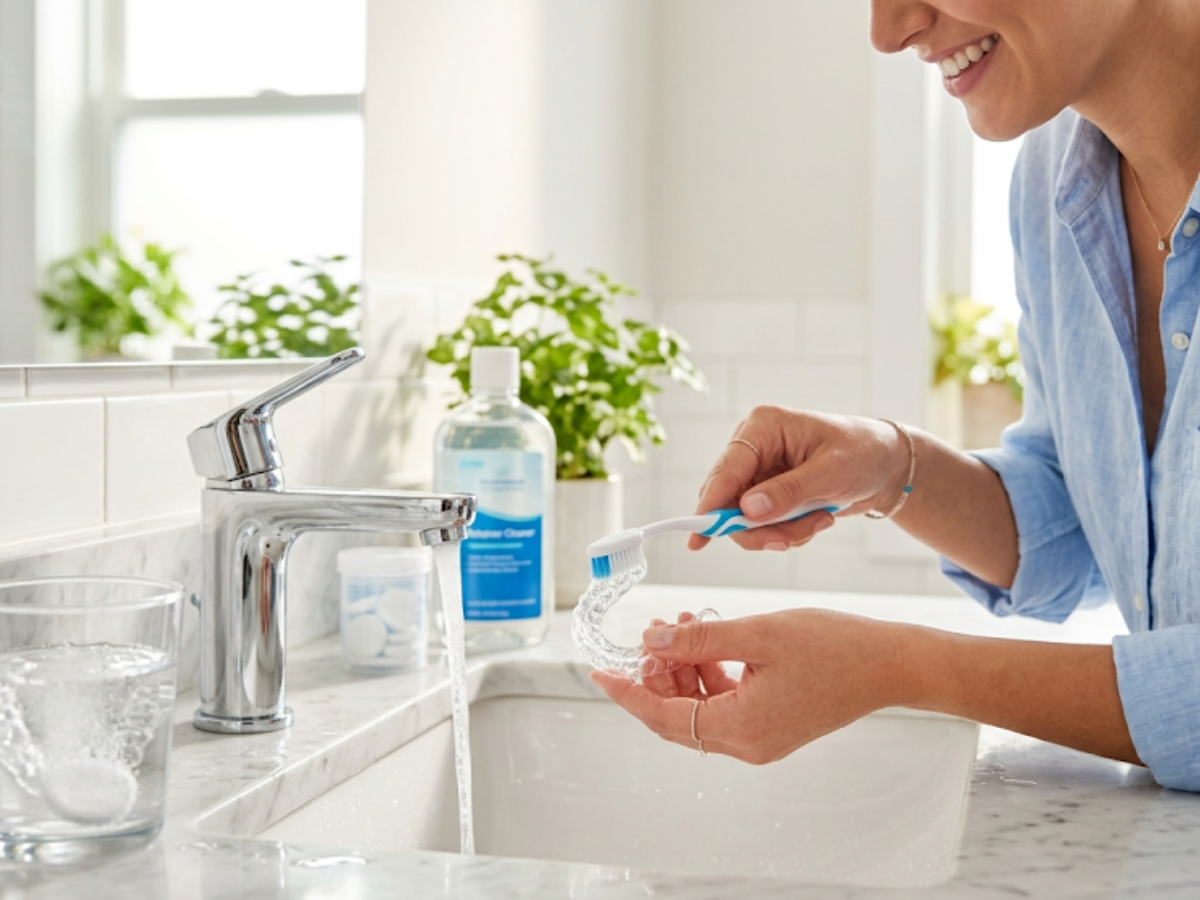
Use a separate toothbrush from the one you use on your teeth, along with a small amount of mild, non-abrasive soap. Brush every surface, including the inside grooves where plaque likes to hide.
A retainer-cleaning solution, or lukewarm water with a denture or retainer cleaning tablet, dissolves buildup that brushing alone can miss. Ten to fifteen minutes is usually enough, and doing this a few evenings a week keeps discoloration and odor from becoming a problem.
Any cleaning solution left on the surface can irritate your gums or leave an unpleasant taste, so give your retainer one more rinse before it goes back in your mouth.
Never wrap your retainer in a napkin or leave it loose in a pocket or backpack. A ventilated retainer case protects it from bacteria, pressure, and accidental damage.
Even well-meaning patients can damage their retainers through habits that seem harmless. Here are the ones we see most often.
Using hot water. It feels like it should sanitize better, but hot water permanently warps clear plastic retainers, changing the fit in a way that cannot be reversed.
Brushing with toothpaste. Most toothpastes contain mild abrasives that are fine for enamel but leave clear retainers scratched and cloudy over time, giving bacteria more places to cling.
Soaking in mouthwash. The alcohol and dyes in many mouthwashes can discolor and degrade retainer plastic, even though mouthwash seems like a convenient cleaning shortcut.
Skipping the case. Retainers left on a nightstand or bathroom counter are far more likely to get lost, sat on, or chewed by a curious pet than those stored properly.
A quick rinse belongs in your routine every time the retainer leaves your mouth. Following proper Invisalign retainer care with a deeper brush-and-soak cleaning two to three times a week keeps buildup from becoming visible, and it takes only a few extra minutes.
If you notice a persistent odor, a white film that will not brush away, or a rough texture on the surface, that is a sign it is time to bring your retainer in for a professional cleaning rather than continuing to scrub at home.
Even with excellent care, retainers benefit from a professional check now and then. During your annual visit, our Bartonville team inspects for hairline cracks, warping, and fit changes that are easy to miss at home.
If your retainer ever becomes permanently cloudy, cracks, or no longer fits the way it used to, patients enrolled in our Retainer Assurance Program can have it addressed without starting the replacement process from scratch.
A small amount mixed with water can help with mild buildup, but use it sparingly, since baking soda is still mildly abrasive on clear plastic.
Small ultrasonic cleaners can work well for retainers, but check with our team first to make sure the settings suit your retainer’s material.
Rinsing alone does not break down the bacterial film that causes odor. Adding a soak two or three times a week, along with your daily gentle brushing, usually resolves persistent odor quickly.
Yes. The same gentle brushing and soaking routine works for both, so the habits you build during treatment carry right over to your retainer.
The routine is the same, though younger patients often need a reminder chart or parental supervision until the habit becomes second nature.
Learning how to clean retainers properly is one of the simplest ways to protect the results you worked hard to achieve. A rinse, a gentle brush, an occasional soak, and proper storage are all it takes to keep your retainer clear, comfortable, and doing its job.
If your retainer ever needs a professional look, or you would rather have us walk you through your cleaning routine in person, stop by our Bartonville office. We are always glad to help your smile stay exactly where it belongs.