Posted on May 8, 2026
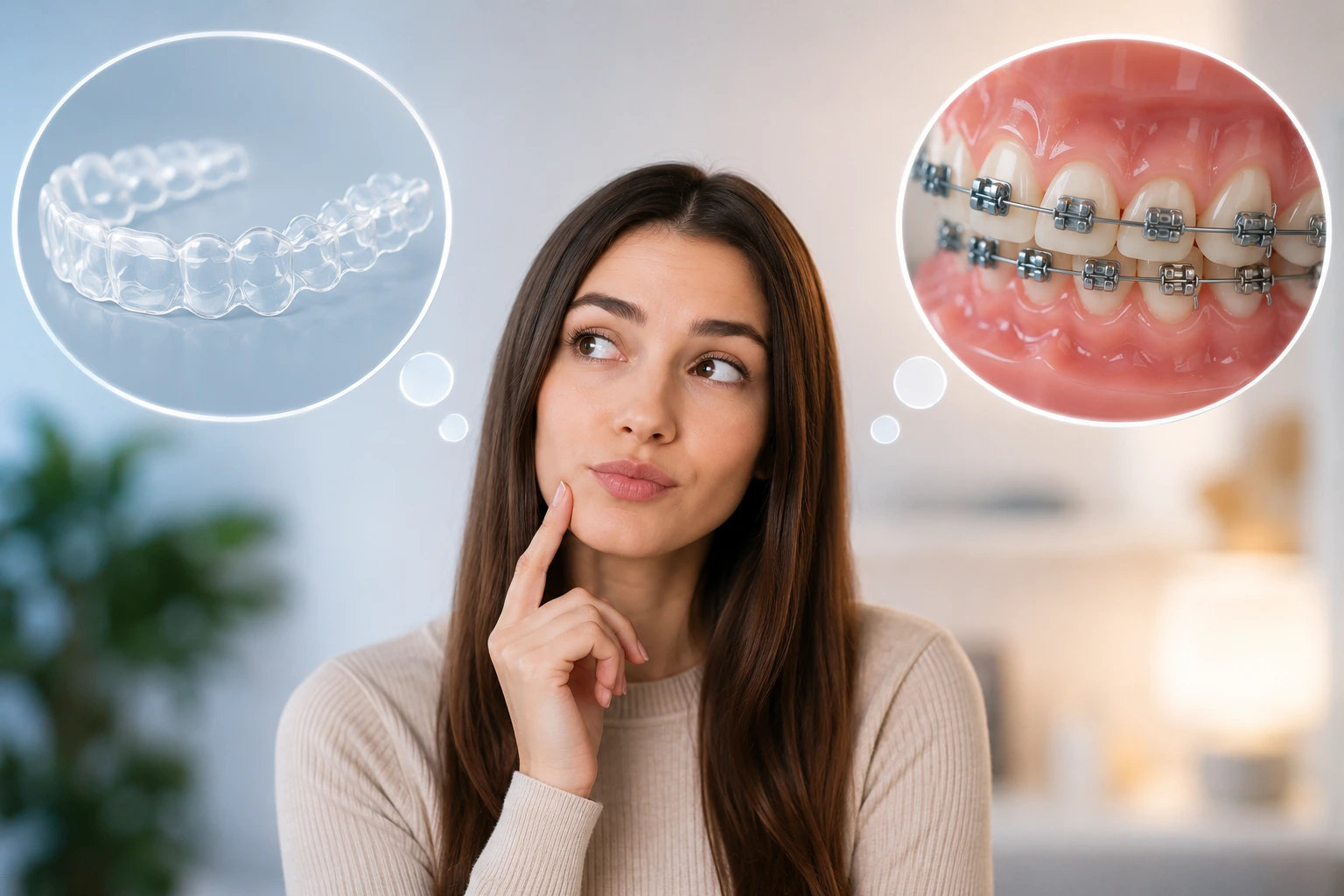
When you finally decide to invest in a straighter smile, one of the first things you likely think about is the finish line. You want to know how soon you can ditch the appliances and show off your new look. The debate between Invisalign and braces often centers on aesthetics, but for most people, the real question is about the clock.
Everyone wants the fastest route to a perfect smile. However, speed isn’t just about the technology; it is about how that technology interacts with your specific dental needs.
If you are looking for a simple answer, here it is: for many patients, Invisalign can be faster. On average, Invisalign treatment takes about 6 to 18 months, while traditional metal braces often require 18 to 24 months. For a more detailed breakdown of braces timelines, see how long braces take to straighten teeth.
But there is a catch. This timeline depends heavily on the complexity of your case. For mild crowding or minor spacing issues, clear aligners use advanced 3D imaging to map out a highly efficient path. This precision often allows you to reach your goals several months earlier than you would with fixed hardware.
To understand the speed, you have to look at the mechanics. Traditional braces use a system of metal brackets, archwires, and ligatures to apply constant, firm pressure. This is a powerful setup designed to move teeth and roots simultaneously.
On the other hand, Invisalign clear aligners are made of SmartTrack material, a proprietary plastic designed for predictable tooth movement. Instead of adjusting a wire every few weeks, you switch to a new set of trays every 7 to 14 days. Each tray is a tiny step toward the finish line, allowing for incremental adjustments that are often more targeted than the broad force applied by braces.
For those with straightforward alignment goals, Invisalign is often the sprinter of the orthodontic world. Since the digital treatment plan calculates every movement before you even put in your first tray, there is very little “trial and error.”
At Gia Orthodontics, we see many adults who only need minor corrections. For these individuals, the efficiency of clear aligner technology is hard to beat.
While aligners are great for many, traditional braces remain the gold standard for complex malocclusions. If your case involves a severe overbite, underbite, or impacted teeth, braces are usually the faster and more effective option. Some patients may qualify for treatments that can straighten teeth without braces.
Fixed braces allow the orthodontist to have maximum control over every individual tooth. Some movements, like root uprighting or complex tooth rotations, are mechanically difficult for plastic trays to achieve alone. In these scenarios, trying to use Invisalign might actually take longer because you may require multiple rounds of refinements to get the job done.
Choosing between treatments also depends on lifestyle and priorities, which is why a detailed Invisalign vs braces comparison can help you decide the right option.
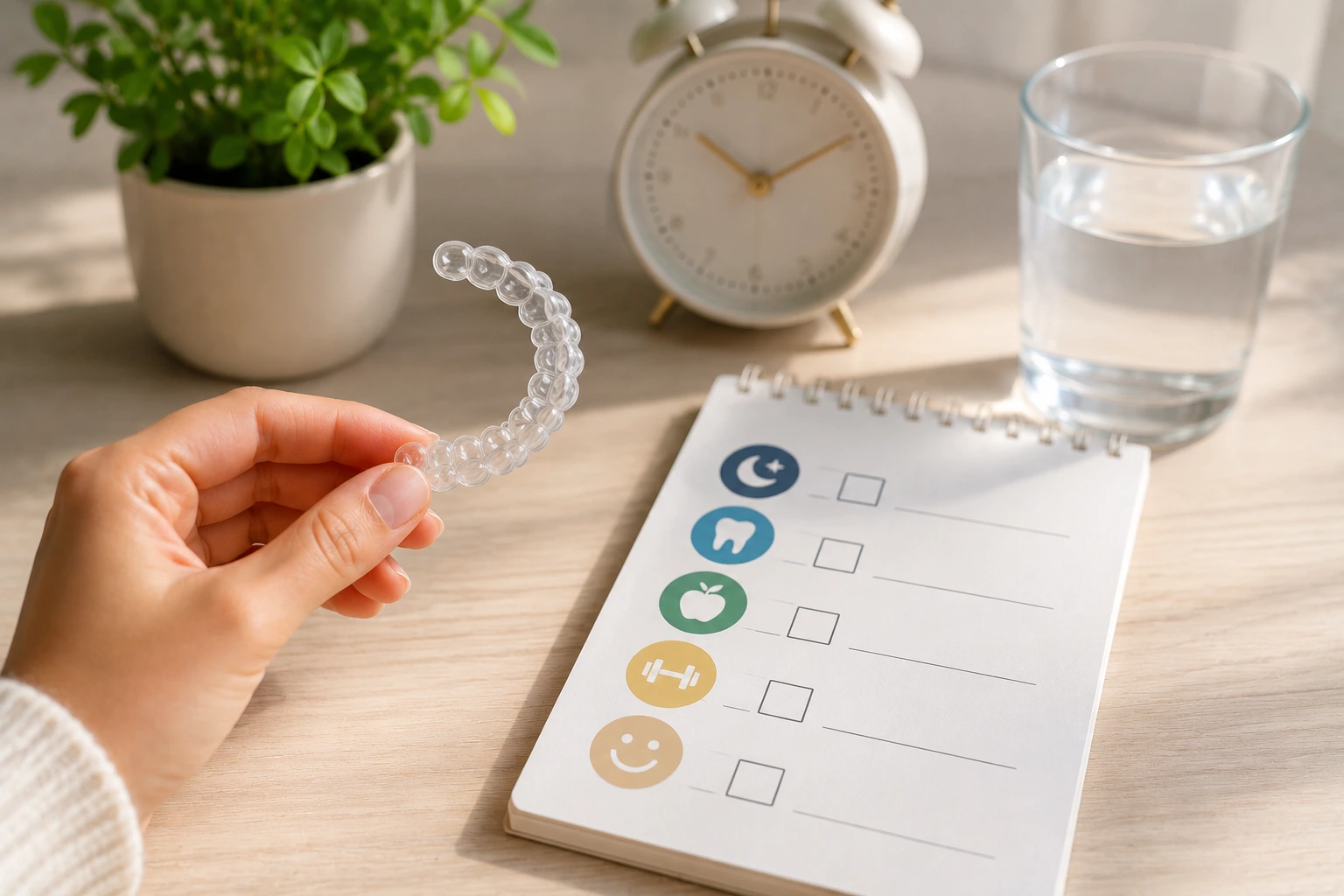
Here is the truth that many people overlook: Invisalign is only faster if you wear it. This is known as patient compliance.
For clear aligners to work, they must be in your mouth for 20 to 22 hours per day. If you leave them on the nightstand or forget to put them back in after lunch, your teeth will begin to drift. Even a few hours of “freedom” can add weeks to your total treatment duration.
Traditional braces are “set and forget.” Since they are bonded to your teeth, they work 24/7 without any effort on your part. For younger patients or busy professionals who might struggle with the discipline of trays, braces can actually end up being the “faster” choice because they eliminate the risk of human error.
Speed isn’t just about the months on the calendar; it is also about the time you spend in the office. Invisalign usually requires fewer check-ups. You might only see your orthodontist every 8 to 12 weeks to pick up your next batches of trays.
Traditional braces typically require a visit every 4 to 8 weeks for wire adjustments and tightening. If you have a packed schedule, the “speed” of Invisalign might be felt in the convenience of fewer office visits and shorter chair time.
While it is possible to switch, it usually does not speed up the process. Switching requires a new 3D scan and a new custom treatment plan, which can actually add time and cost to your journey.
Generally, children and teens have more pliable jawbones, which can lead to faster tooth movement. However, adult orthodontics has come a long way, and healthy adults can achieve rapid results with both clear aligners and metal braces.
Yes, ceramic braces work on the same mechanical principles as metal ones. They offer a more discreet appearance while maintaining the same treatment speed for complex cases.
Losing a tray can cause a delay. You should contact your office immediately. Usually, we will have you wear your previous tray or move to the next one, but this can stall your orthodontic progress by a week or two.
Some supplemental technologies claim to speed up bone remodeling. While these can be helpful, the biggest factors in speed remain your orthodontic diagnosis and your daily wear habits.
Ultimately, the fastest treatment is the one that is most appropriate for your unique smile. If you have minor crowding and the discipline to wear your trays, Invisalign will likely get you to the finish line much sooner. If your smile requires significant bite correction, traditional braces will provide the most efficient and predictable path.
At Gia Orthodontics, we prioritize your results and your lifestyle. Whether you choose the nearly invisible path of clear aligners or the time-tested power of braces, our goal is to get you that confident smile as efficiently as possible.
Ready to see which option is faster for you? Stop guessing and start glowing. Schedule your consultation at Gia Orthodontics today to get a customized timeline for your new smile. We will help you weigh the pros and cons so you can choose the path that fits your life and your goals. Let’s get your journey started.