Posted on July 16, 2026
As parents, we want our children to grow up healthy, happy, and confident. That is exactly why early orthodontic treatment is important for so many families. Catching bite and alignment issues while a child’s mouth is still developing can shape a lifetime of better oral health, easier eating, and a smile they are proud to show off.
A child’s jaw only grows the way nature intended once, and that growth window closes over time. Guiding it early, rather than waiting until the teenage years, often means simpler treatment, fewer surprises, and a smoother path to a healthy adult smile.
In this blog, we will walk through the seven biggest benefits of starting orthodontic care early, along with the signs to watch for, so you can feel confident about what is right for your growing child.
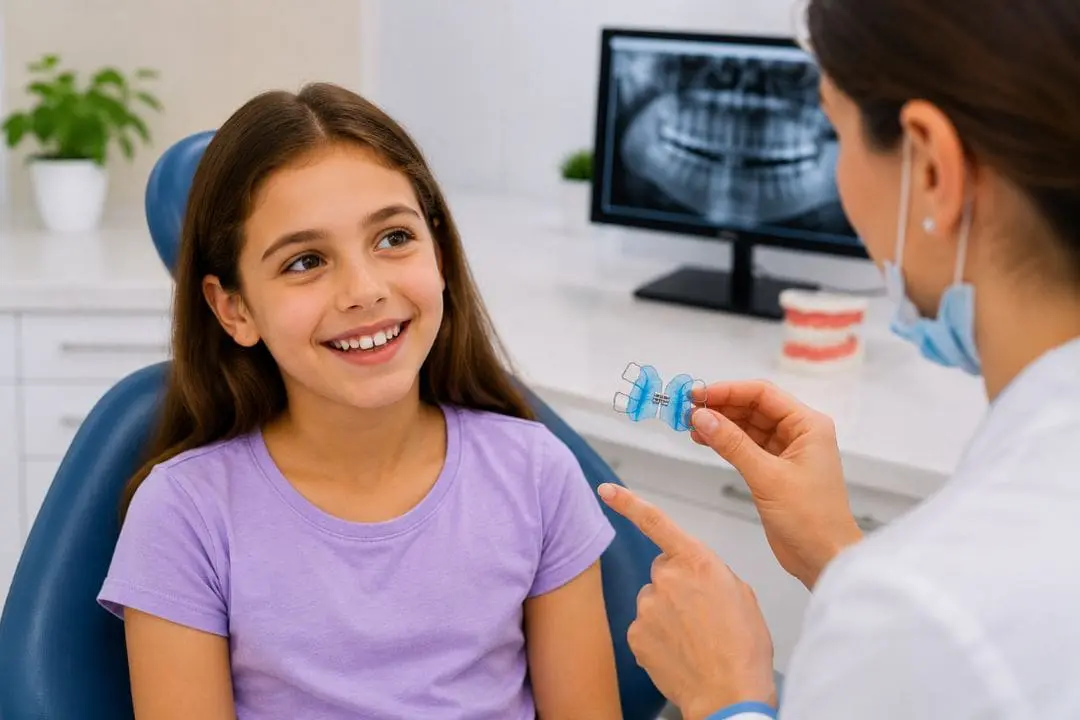
Early orthodontic treatment, also called interceptive orthodontics or Phase 1 treatment, is care given to children while their jaws and teeth are still growing, typically between ages 7 and 10. Instead of waiting until all permanent teeth arrive, this approach addresses developing issues while there is still room to guide growth naturally. Phase one orthodontics focuses on correcting developing bite and jaw concerns early, helping create a healthier foundation for permanent teeth as they erupt.
The American Association of Orthodontists recommends that every child have their first orthodontic checkup by age 7. At this stage, a mix of baby and adult teeth makes it easier to spot patterns that could turn into bigger problems later.
Understanding why early orthodontic treatment is important starts with understanding how a child’s mouth develops. Jaw growth, tooth eruption, and bite alignment all happen on a timeline, and certain issues are far simpler to correct while that timeline is still in motion.
Waiting too long can mean some problems become harder, slower, or more costly to fix. This is why so many orthodontists encourage an early evaluation, even if a child does not need treatment right away.
A child’s jaw is still forming, which gives orthodontists a window to guide its development gently. Early intervention can help correct a narrow or misaligned jaw before it fully sets, supporting better facial balance and bite function down the road.
Crowding is one of the most common reasons parents seek early treatment for kids. By expanding the dental arch at the right time, we can create enough space for adult teeth to erupt more straight, often reducing the need for extractions later.
Thumb sucking, tongue thrusting, and prolonged pacifier use can quietly reshape a child’s bite. Early treatment helps interrupt these habits before they cause lasting changes to tooth alignment or jaw position.
When crowding or jaw discrepancies are caught early, we can often manage them with growth guidance instead of removing teeth later. This is another reason why early orthodontic treatment is important for preserving a child’s natural smile.
An improperly aligned bite can affect how a child chews, speaks, and even breathes. Addressing malocclusion early supports clearer speech patterns and more comfortable, efficient chewing as permanent teeth settle into place.
Crowded or overlapping teeth are harder to brush and floss properly, leaving more room for plaque to build up. Straightening teeth earlier makes daily hygiene simpler, supporting healthier gums and fewer cavities over time.
A smile that a child feels good about can shape how they interact at school, in sports, and with friends. Early treatment often shortens or simplifies later orthodontic needs, giving kids more reasons to smile freely as they grow.
Every child’s smile develops differently, and some signs are easier to spot than others. Learning the signs of early orthodontic need helps families know when an orthodontic evaluation may benefit their child’s developing smile. If we notice any of the following, it may be time to schedule a consultation:
Many parents assume orthodontic care should wait until every adult tooth has arrived. In reality, some of the most effective growth guidance happens years before that point, while the jaw is still shaping itself.
Another common myth is that an early evaluation always leads to early braces. Most of the time, it simply means a professional keeps an eye on development, stepping in only if and when it truly benefits the child.
Some families also worry that early treatment is purely cosmetic. In truth, it often addresses functional concerns like chewing and jaw alignment, with a straighter smile as a welcome result.
Most orthodontists agree that age 7 is the ideal starting point for a first evaluation. At this stage, we can identify developing issues such as crossbites, crowding, or jaw discrepancies while there is still enough growth left to guide.
This does not always mean treatment starts immediately. Often, it means closely monitoring growth patterns so we can step in at the most effective moment, which is part of why early orthodontic treatment is important, even when a child’s smile looks fine on the surface.
Early orthodontic treatment is not about rushing a child into braces. It is about using the natural growth window to make later treatment simpler, shorter, and often more comfortable.
Families who invest in early orthodontic care frequently see fewer complications, less need for extractions, and children who feel more confident earlier in life.
Most orthodontists recommend a first evaluation by age 7, when a mix of baby and permanent teeth clearly reveals developing bite or spacing issues.
Not always. Early treatment often reduces the length or complexity of a second phase, and some children need only one round of care.
Most children experience mild pressure that fades quickly. Modern appliances are designed for comfort during growth-guided treatment.
Some issues become harder and more costly to correct once jaw growth is complete, which is why early evaluations matter so much.
An orthodontic evaluation is the only reliable way to know. Signs like crowding, early tooth loss, or jaw shifting are worth having checked.
Every growing smile deserves the chance to develop the right way, and that starts with knowing what to watch for early. If you have noticed crowding, bite issues, or other changes in your child’s smile, do not wait for a small concern to become a bigger one.
We would love to meet your family and map out the best path forward together. Schedule a complimentary consultation with our team today, and let us help your child grow into a healthy, confident smile that lasts.