Posted on July 16, 2026
As parents in Bartonville, we often wonder whether our kids need braces sooner rather than later. One of the most common questions we hear is, “Is early orthodontic treatment necessary, or is it smarter to wait until every permanent tooth arrives?”
The honest answer is that timing matters, and for some children, acting early makes a real difference. Learning how early orthodontic treatment works can help parents understand when an early evaluation may benefit their child’s developing smile. Below, we break down the signs, the benefits, and when it is time to visit.
Early orthodontic treatment, also called interceptive orthodontics, is care that begins while a child still has some baby teeth. It focuses on guiding jaw development and creating room for permanent teeth to grow in the right position.
This differs from waiting for a full set of adult teeth. The goal is to catch bite problems early, before they grow harder and more expensive to correct later.
Because a young jaw is still forming, we can influence how it grows in ways that become impossible once a child stops growing. That window of opportunity is exactly why timing plays such a big role.
Not every child needs it, and that is a straight answer. For many kids, a single round of braces or clear aligners during the teen years works beautifully.
So when families ask us whether early orthodontic treatment is necessary, our reply depends on how each child’s teeth and jaws are developing. A simple orthodontic evaluation helps us tell the difference.
The American Association of Orthodontists recommends that every child see an orthodontist by age 7. By then, enough adult teeth have arrived for us to spot patterns that hint at a future problem.
An early visit does not mean early braces. Often, it simply means we watch your child’s growth over time and step in only if and when it truly helps.
Some issues are easier to see than others. Here are the signals Bartonville parents should keep an eye on.
An underbite, overbite, or crossbite often reflects how the upper and lower jaws line up. Left alone, these can affect chewing, speech, and facial balance over time.
A palatal expander or similar appliance can gently widen the arch and create space while the jaw is still growing, and is easy to guide.
If teeth come in as crowded teeth or look twisted, there may not be enough room in the mouth. Early guidance can reduce the need for extractions down the road.
Wide gaps or front teeth that stick out are also worth checking during an early visit, since both affect long-term alignment and how confident your child feels smiling.
Long-term thumb sucking, mouth breathing, or trouble biting into food can reshape the jaw as a child grows. Catching these habits early often prevents bigger changes to the bite.
We also watch for baby teeth lost too early or held too long, since both can steer adult teeth off course before they even appear.
When we treat at the right moment, we work with your child’s natural growth and development rather than fighting it. One of the greatest benefits of early orthodontics is the ability to guide jaw growth while your child is still developing, often reducing the need for more complex treatment later. This can shorten or simplify care later on.
Early attention can lower the odds of surgery for severe malocclusion, protect protruding teeth from injury, and build your child’s confidence during a sensitive age.
There is a practical payoff, too. Correcting a small issue now is usually simpler and gentler than untangling a bigger one after all the permanent teeth have settled into place.
Good alignment also makes daily brushing and flossing easier, which supports healthier gums and fewer cavities as your child grows into their teen years.
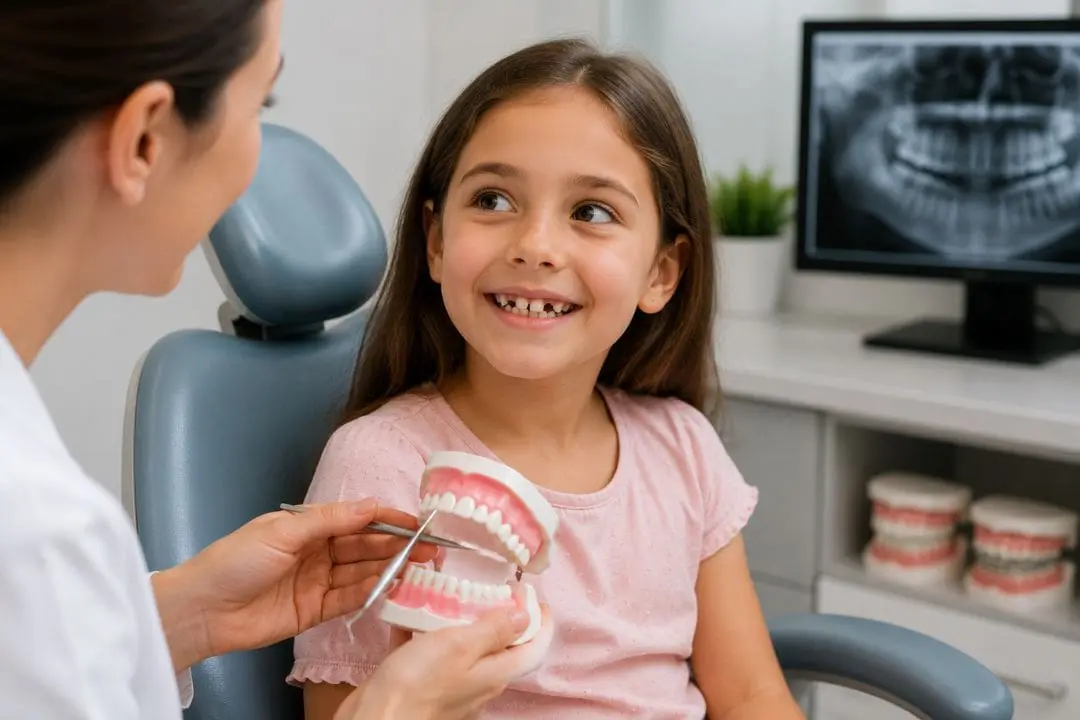
We keep that first appointment relaxed and friendly, because a calm child tells us far more than a nervous one. Dr Patel gently examines the teeth, jaws, and bite.
We look at how the teeth meet, how the jaw moves, and how the adult teeth are positioned beneath the surface. From there, we explain what we see in plain language.
If treatment is not needed yet, we say so clearly and simply monitor your child’s growth. When care is the right call, we walk you through every option before anything begins.
Sometimes, yes. This approach is called two-phase treatment, and it does not mean anything went wrong.
Phase one guides jaw growth and opens up space. Phase two, usually during the teen years, fine-tunes the final bite and alignment for a lasting result.
Many children need only one phase. Part of our job is being upfront about which path fits your family, because we never recommend treatment a child does not truly need.
If your child is around seven, or if you have noticed any of the signs above, a check-up is a smart next step. There is no cost and no pressure to begin.
So the next time you wonder, “Is early orthodontic treatment necessary for my child?” remember that a quick evaluation gives you a clear, expert answer instead of guesswork.
We proudly serve families across Bartonville, Lantana, Argyle, Northlake, and Copper Canyon. Book a complimentary consultation with Dr Patel today, and let us give you honest answers about your child’s smile.
We suggest a first visit around age seven, when enough permanent teeth have arrived for us to catch bite or spacing problems early.
Most children experience only mild pressure or soreness for a few days after appliances are placed. It fades quickly, and we keep everyone comfortable throughout.
Sometimes. Early care guides growth, while a later phase perfects alignment. Many kids need only one phase, and we always tell you honestly.
Not usually. Guiding jaw growth early can prevent complex procedures later, which often saves families time, discomfort, and costs throughout a child’s treatment.
For some children, yes. For others, waiting makes certain problems harder to fix. A quick evaluation around age seven removes the guesswork completely.
Deciding when to begin should never feel like a gamble. A single, no-cost evaluation tells you exactly where your child stands and whether early care would truly help. If you have been asking yourself whether the timing is right, let our team give you real clarity instead of uncertainty. Schedule your child’s free consultation with Dr Patel now, and take the first confident step toward a healthy, beautiful smile that lasts a lifetime.