Posted on July 16, 2026
Many parents assume orthodontic care only starts once all adult teeth arrive. But what is early orthodontic treatment, and why do so many orthodontists recommend it long before the teenage years? It refers to orthodontic care given to children while their jaws are still growing and permanent teeth are replacing their baby teeth. Catching issues at this stage often means simpler, shorter treatment later on.
In this guide, we break down the signs to watch for, the real benefits of starting early, and the ideal age to schedule that first evaluation. Understanding this process now can help you make informed decisions and save your child from more complicated treatment down the road.
So, what exactly is early orthodontic treatment? It is also called Phase 1 treatment, and it focuses on guiding jaw growth and creating room for permanent teeth before a child’s bite fully develops.
Unlike traditional braces for teens, early treatment does not aim to straighten every tooth right away. Instead, it addresses skeletal issues, bite misalignment, and crowding while the jaw bones are still flexible and responsive to gentle guidance.
This approach can prevent the need for more invasive procedures, including tooth extractions or jaw surgery, once your child reaches adolescence.
Recognizing the signs early makes all the difference. Parents are often the first to notice something is off, even before a dentist does. Here are the most common indicators we look for during a pediatric orthodontic evaluation.
Benefits of Early Orthodontic Treatment
Understanding what is early orthodontic treatment naturally leads to the next question: why does timing matter so much? Here is what early intervention can achieve.
These early treatment advantages often lead to healthier jaw development, improved function, and less complex orthodontic treatment later in life.
The American Association of Orthodontists recommends that every child have an early orthodontic evaluation by age 7, when jaw growth and tooth development can be assessed most effectively. At this stage, children typically have a mix of baby and permanent teeth, allowing orthodontists to assess jaw growth and bite development. Most children do not need braces at this age and only require regular monitoring.
An early evaluation helps identify potential issues before jaw growth slows, making treatment easier if needed. No dentist referral is required, and parents can book a consultation sooner if they notice bite problems or habits like prolonged thumb sucking.
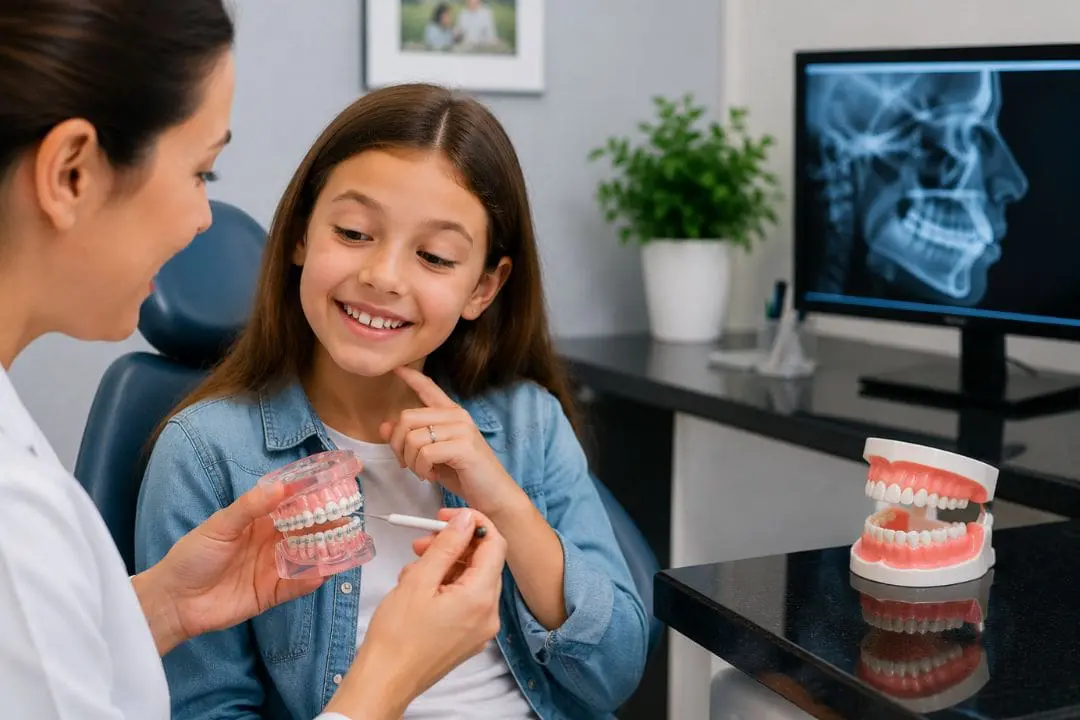
A first evaluation is relaxed and non-invasive. We examine jaw growth, tooth eruption patterns, and bite alignment through a simple visual exam and, if needed, digital imaging.
Most visits end with one of two outcomes: a plan to monitor growth every six months or a recommendation for early treatment using tools such as palatal expanders or partial braces.
Either way, you leave with a clear understanding of your child’s dental development and a plan tailored to their specific needs. We take the time to explain every finding in plain language, so you never feel unsure about the next step.
Early orthodontic care is one of the simplest ways to protect your child’s long-term oral health. The earlier a problem is caught, the easier and less invasive it usually is to correct.
If your child is around age 7, or you have noticed any of the signs above, do not wait for a routine dental visit to bring it up. Every month that passes is a month of growth; we could be guiding in the right direction. During your consultation, we’re also happy to answer questions about long-term orthodontic care, including retainer replacement cost, so you know what to expect after future treatment is complete.
Schedule a consultation with our orthodontic team today, and we’ll guide you through every stage of orthodontic care, including why wear retainers matters once active treatment is complete, helping your child achieve a healthy, confident smile that lasts a lifetime.
No, most children who undergo an early evaluation simply need monitoring, with actual treatment recommended only if a real issue is identified.
Age 7 is the recommended age, since a mix of baby and permanent teeth allows orthodontists to spot developing issues clearly.
It can reduce the extent of future treatment by correcting jaw and spacing issues early, though some children still need a second phase.
Most early treatments involve mild pressure and adjustment periods, similar to the discomfort of typical orthodontic treatment, and are generally well tolerated by kids.
No referral is required. Parents can schedule a first evaluation directly with our office whenever they notice signs of concern.